
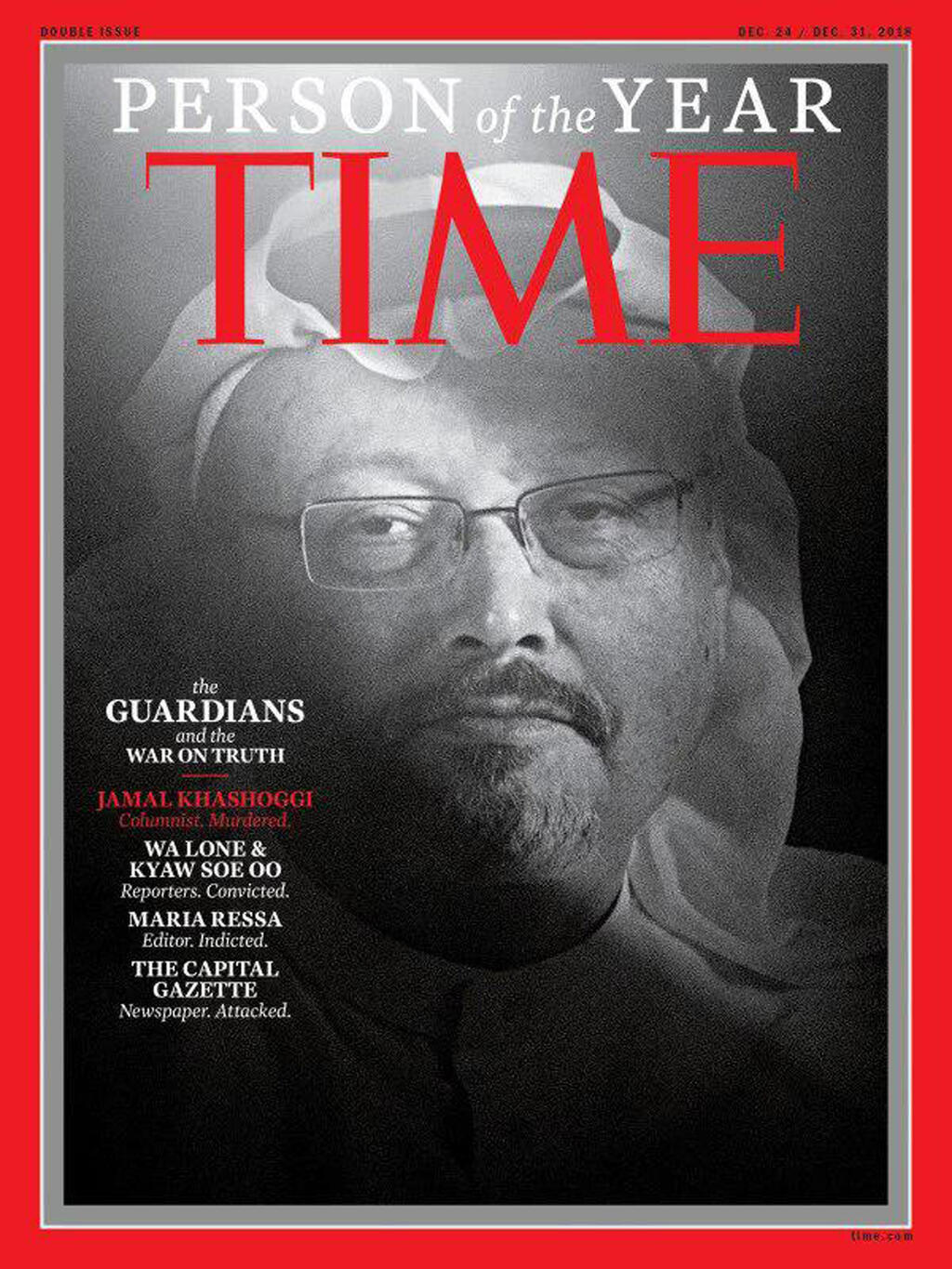
Saudi Crown Prince Mohammed bin Salman received a lavish welcome from President Donald Trump at the White House — and sealed several major deals, including purchases of F-35 jets and tanks, some of the world’s most advanced AI chips, a civilian nuclear project and more. Seven years after the murder of journalist Jamal Khashoggi, which drew global condemnation and damaged his international standing, the crown prince has reversed course and returned from the United States in a position of strength. Across the Middle East and beyond, observers are now asking where he intends to take his country.
“The Saudi public is likely to deeply appreciate the tremendous honor he received,” said Dr. Michal Yaari, an expert on Gulf states at Ben-Gurion University and the Open University. “He restored Saudi prestige. He has made Saudi Arabia not just another state in the region, but a central mediator and strategic partner in shaping the Middle East. Even if he faces criticism, it pales in comparison to his many successes.”
4 View gallery
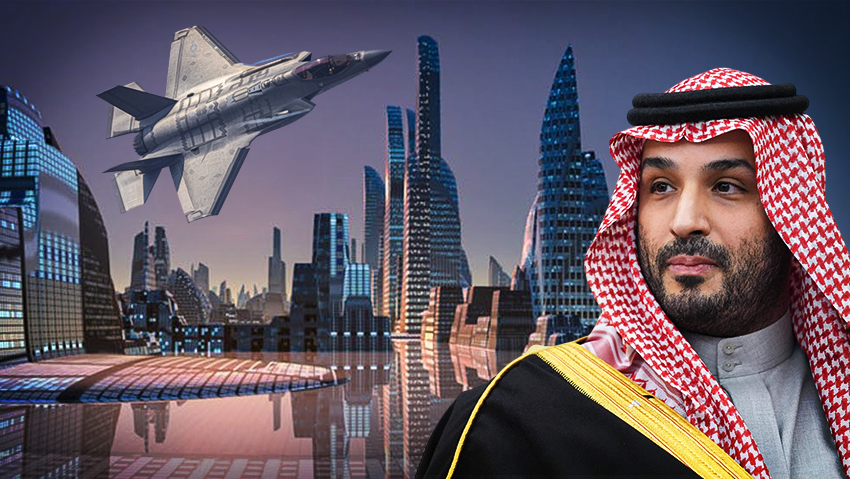
Bin Salman against the backdrop of the vision of the city of Neom, and an F-35 aircraft
(Photo: Shutterstock, Evan Vucci/AP Photo)
In Riyadh, analysts also emphasized the importance of the moment. Saudi commentator Abdul Hameed Al-Ghabin said the White House meeting “represented a formative moment that reshaped the strategic framework of ties between Riyadh and Washington. It was not only an exchange of words, but a redrawing of the balance of power in the Middle East and the broader international order.”
According to Dr. Yaari, the royal treatment the crown prince received reflected a U.S. effort to bolster his standing not only in Washington but also in Saudi Arabia and across the Arab and Muslim worlds. “This is one of the best periods in the kingdom’s history, if not the best, and he is responsible for it,” she said. “In less than a decade, he pulled his country out of its image as a fundamentalist Islamic state that suppresses human rights and murders journalists and turned it into a central international player and an attractive partner for the world’s leading power.”
4 View gallery
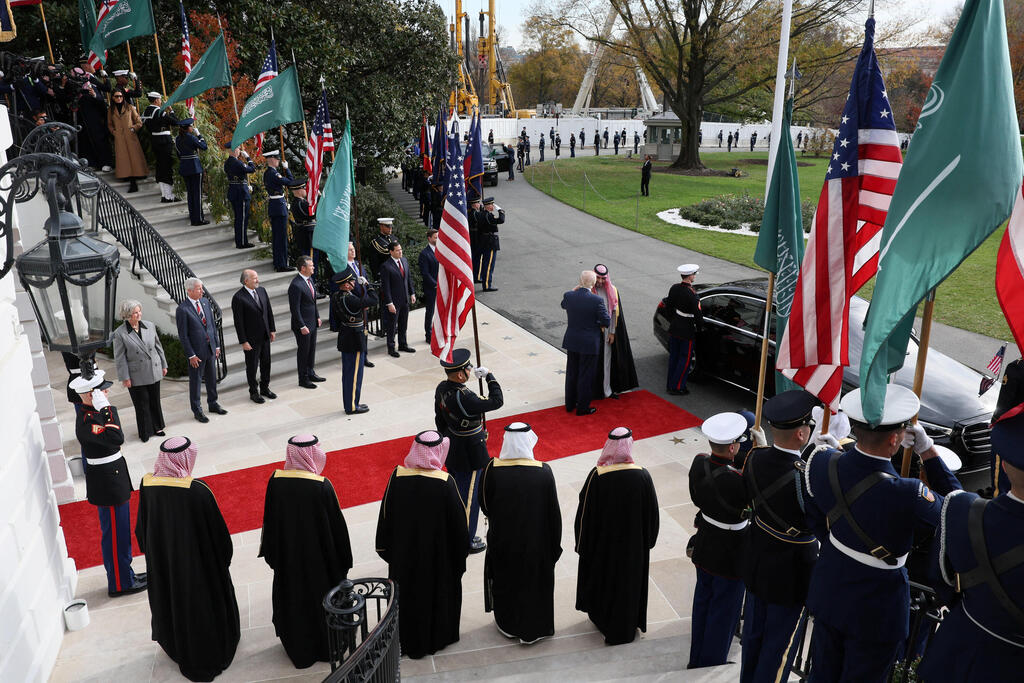
Trump welcomes Saudi Crown Prince to the White House
(Photo: REUTERS/Jessica Koscielniak)
She added that “today’s Saudi Arabia acts against jihadist Islam while racing toward advanced technology, and that is reflected in its deals with the United States. Moreover, the crown prince has succeeded in getting the U.S. president, and not only him, to dismiss his complicated history of targeting opponents. Trump, unlike previous American presidents, is not trying to lecture Saudi Arabia but to gain as much as he can for himself and his country. When that aligns with Saudi interests, it is a success story.”
 Dr. Michal YaariPhoto: Tomer Appelbaum
Dr. Moran Zaga, a senior researcher with the Tamar political geography research group focused on the Israeli-Palestinian conflict, said bin Salman aimed to secure as much as possible on the strategic and security front, including in comparison with neighbors such as Qatar, which received U.S. security guarantees. Strengthening Riyadh’s role in the Gulf, she said, is central to Saudi thinking.
But she noted that Saudi Arabia has faced challenges advancing its mega-projects, making economic matters a higher priority than strategic ones. “What bin Salman takes with him from the U.S. are concrete economic gains he can put into motion immediately — AI, weapons and long-term investments that will generate essential profits,” she said.
4 View gallery
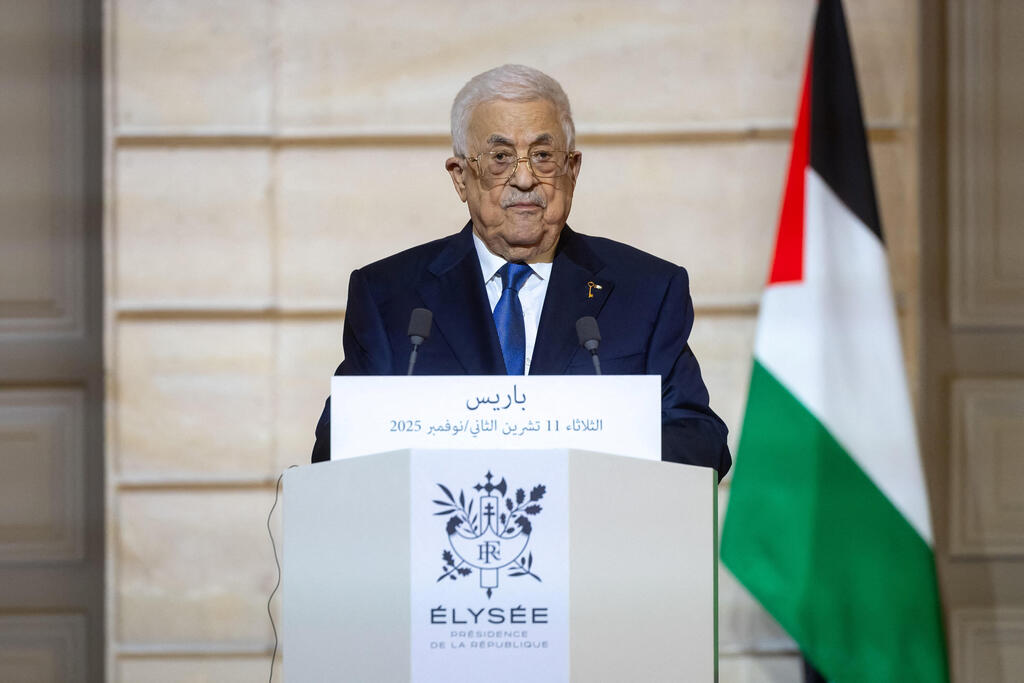
The statements reflect a new Saudi approach; Mahmoud Abbas
(Photo: Christophe Petit Tesson/Pool via REUTERS)
Zaga added that despite the F-35 announcement, past experience suggests the deal may not materialize soon, and in any case, years are expected to pass before Riyadh receives the jets. “It would give Saudi Arabia an enormous boost, far beyond image, but what bin Salman truly has in hand right now is the economic portfolio,” she said. “And in that space, Saudi Arabia is focused on three interconnected areas: artificial intelligence, chips and access to advanced technologies.”
“Bin Salman is returning with economic agreements meant to give Saudi Arabia an advantage in the Gulf competition and position it as a central regional hub as the world enters a new technological era,” she said.
Saudi officials say that although reports cited $557 billion in deals, the real figure is closer to $1 trillion. “This is not a ‘grant’ to the United States,” Al-Ghabin said. “It is a long-term investment in core technology sectors, with artificial intelligence and semiconductors at the forefront. Trump’s willingness to ease access to advanced AI chips for Saudi Arabia demonstrates the magnitude of the shift in economic relations between the two countries — from traditional energy ties to a technological partnership that is redefining Saudi Arabia’s place in the global economy.”
In fact, only those who have not followed Saudi Arabia’s evolution in recent years still dismiss it as “camels and desert.” Crown Prince Mohammed bin Salman’s Vision 2030 aims to end the kingdom’s dependence on oil, transform it into a technological power and open new economic channels. That ambition was evident not only during his visit to Washington this week but also during Trump’s visit to the Gulf in May — a trip that skipped Israel and focused on massive deals. To advance the vision, the Saudis are also investing in education, introducing school programs on innovation and artificial intelligence.
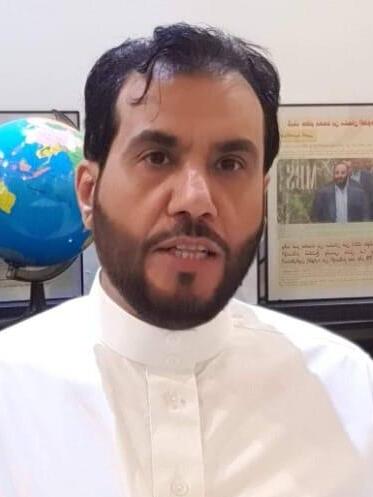 Abdul Hameed Al-Ghabin
Even with 2030 approaching, the Saudis are not anxious. “When people say it’s not moving fast enough or going nowhere, they answer, ‘Yes, it’s a vision,’” said Dr. Yoel Guzansky, a former National Security Council official and head of the Gulf Program at the INSS. “They see it flexibly. There is no real timetable. Some things will materialize, and some won’t.”
According to Guzansky, strengthening ties with the United States is not just another goal for the crown prince — it is also the means by which he can pursue additional ambitions, both inside and outside the kingdom. “He needs the U.S. at his side, and it appears he is getting that,” he said.
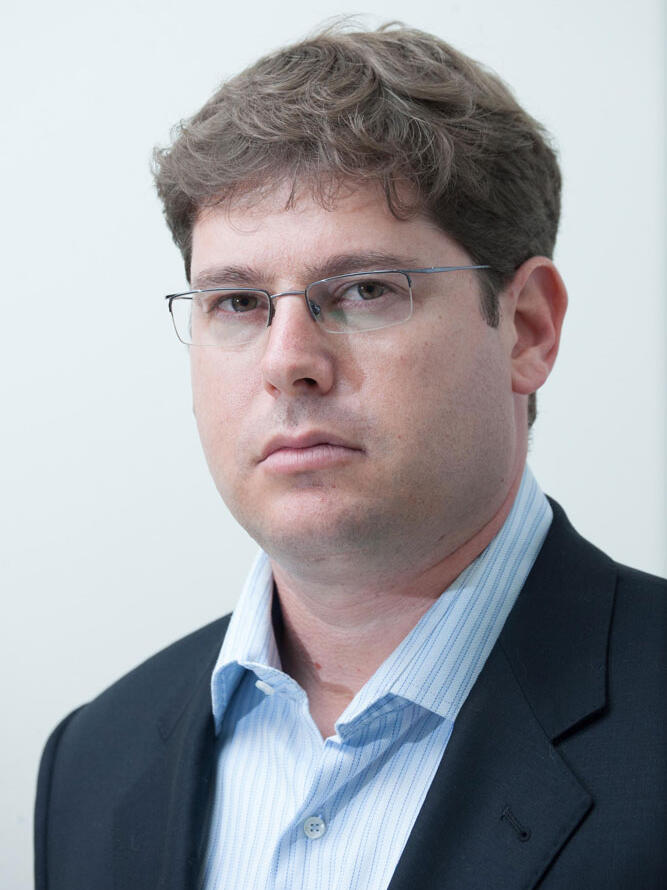 Dr. Yoel Guzansky
Normalization with Israel, Guzansky noted, could actually harm the crown prince, who serves as Saudi Arabia’s de facto ruler due to his father’s illness but wants to solidify his position as heir. “Normalization would damage his legitimacy — domestically, in the Muslim world, in the region and across the broader Islamic sphere,” he said. “Most Saudis oppose it, and the palace opposes it. Why would he do that to himself? It would be like shooting himself in the foot. So it suits him to work with the high bar set on the Palestinian issue.”
On Thursday, as columnist Nahum Barnea reported in ynet, bin Salman is demanding from Trump an American guarantee for the establishment of a Palestinian state within five years — not just a vague, nonbinding commitment to an undefined “path.”
According to Dr. Yaari, “the crown prince’s visit highlights the fact that Israel has become something of a burden in Trump’s eyes, while Saudi Arabia is the magician pulling rabbit after rabbit out of the hat. Israel approaches negotiations with statements rejecting any dialogue with the Palestinians, while the Saudis insist on the opposite. For now, both sides are entrenched in their positions, and there is no sign of flexibility. Even without groundbreaking announcements, the visit is significant because American attention is shifting more and more toward the Saudi side — at Israel’s expense. The more Israel says no, the more Trump says yes to the Saudis.”
Dr. Zaga said Saudi Arabia signed memorandums of understanding with the Palestinian Authority on reforms in education, employment and modernization. “Saudi Arabia is heavily invested in these reforms, based on the idea that it is the patron preparing the PA to become an effective state capable of functioning on its own. That interests Riyadh much more than Israel right now. It is preparing the PA for statehood, and that marks a shift in Saudi involvement — until now it preferred a hands-off approach.”
Al-Ghabin said the explicit Saudi statement on continuing normalization — while stressing the need for a clear path toward a two-state solution — reflects a new Saudi approach: supporting peace not as a political tactic but as a tool of regional engineering that promises stability and gives the kingdom more ability to shape outcomes. “In this approach, Saudi Arabia has moved from being a passive recipient of developments in the Israeli-Palestinian conflict to a side setting the terms and defining a new political ceiling,” he said.
Beyond the military, technological and economic gains underscored by the visit, Guzansky pointed to the importance of the civilian nuclear issue — which he called “the most problematic.” “There are major question marks here,” he said. “The Saudis want to enrich uranium themselves (and the U.S. says that is not part of the agreement). Israel needs to keep its finger on the pulse and demand strict limits and transparency from the Americans.”
Al-Ghabin concluded: “The broad consensus surrounding the visit — on Sudan, Yemen and Iraq, as well as support for regional stability and the peace process — reflects the kingdom’s vision that Middle East security is built on a network of interconnected interests, not on circumstantial arrangements or reactive steps. In that sense, the meeting reinforced a strategic trajectory: a rising Saudi Arabia, investing in the future and recalibrating the region’s compass toward stability and prosperity.”

