
US President Donald Trump has famously claimed – and reiterated multiple times throughout the year – that he “ended eight wars” and “saved millions of lives” around the world.
The world, on its part, has learned to take these claims with a pinch of salt, for there are reasons for the cynicism.
In Gaza, Israel continues to kill Palestinians with impunity despite a ceasefire coming into effect on October 10.
The war in Ukraine – which Trump vowed to end within 24 hours of beginning his second term in January – continues unabated.
The Thailand-Cambodia conflict has flared up once again after a brief pause. And the civil war in Sudan has sparked the largest internal civilian displacement in history, with millions caught in the crossfire between the country’s military and the paramilitary Rapid Support Forces (RSF).
The year also saw an escalatory curve in the civil war in Myanmar, while gang violence and armed conflict in Haiti led to an unprecedented displacement level of 1.4 million people.
And while Israel and Iran have stopped fighting and the India-Pakistan flare-up ended in four days, peace between these nations remains fragile.
With an unprecedented number of people killed in wars and conflicts during the year, writer and expert on geopolitical conflicts Dan Steinbock summed up 2025 as “exceedingly dark — in terms of unwarranted human and economic costs” and that the human casualties “could have been avoided with appropriate international diplomacy”.
“In the past, there was an assumption that genocides would no longer happen. The fact that such an atrocity could take place in Gaza for two years, night and day…that is likely to herald something much worse in the future,” Steinbock tells TRT World.
Steinbock’s grim prediction of “the proliferation of ever new genocides” and perhaps new wars carries weight as fresh faultlines emerge around the world and Trump, the self-proclaimed peacemaker, sends battleships to the Caribbean in the gravest escalation against Venezuela.
Related
As 2025 winds down, TRT World presents an analysis of the biggest conflicts that blighted the year and, perhaps, also set the tone for the new year.
‘Deadliest year’ for Gaza
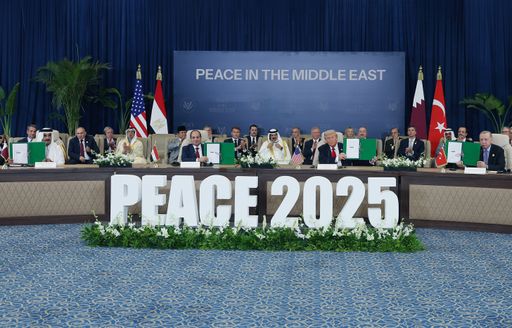
The unveiling of a 20-point peace plan, followed by the start of a ceasefire on October 10 – backed by the UN and major regional powers like Turkiye – had raised hopes of an end to Israel’s genocidal war in Gaza and other Palestinian territories.
But the Zionist regime merely changed the rules of engagement, continuing to target civilians in the devastated enclave and killing nearly 400 people since the truce.
The recent deaths have taken the overall toll in Gaza to more than 70,000 since the start of Israel’s war in October 2023.
More than 30,000 of those deaths were reported in 2025 alone, according to a conglomeration of Israeli human rights groups.
“In 2023 and 2024, grave violations were documented in Gaza, but the outcomes in 2025 reveal a sharp deterioration, with the death toll nearly doubling, displacement becoming almost across the entire enclave, and hunger becoming a cause of mass death,” a report by 12 rights groups said.
The report described 2025 as “the deadliest and most destructive for Palestinians since 1967”, the year of the Six-Day War, which led to Israeli occupation of Gaza and the West Bank.
As a big question mark hangs over the ceasefire, there are indications that the death toll in the besieged enclave could be as high as 100,000 – signifying thehigh human cost of Israel’s genocidal actions.
Analysts and experts, however, also point out the resilience of the Palestinian people, which ostensibly played a critical role in forcing the Netanyahu government to accept the ceasefire.
Related
The Gaza ceasefire was this year’s most important global event, says Fatemeh Karimkhan, a Tehran-based Iranian journalist.
Despite all Israeli efforts and US backing, Tel Aviv has not “succeeded in clearing” Gaza and has been forced to accept a ceasefire, which shows that the Zionist “war machine” is not the only player on the field, Karimkhan tells TRT World.
Ramzy Baroud, a Palestinian author and analyst, sees “a significant paradigm shift”, with many countries distancing themselves from the Netanyahu government over its conduct.
“The power of the Palestinians and the global solidarity they inspire are far greater than all pro-Israel Western propaganda combined,” Baroud tells TRT World.
“In Gaza, Israel has learned a critical lesson: its immense military power, even with total Western support, can no longer guarantee political outcomes.”

Related
Stalemate in Ukraine
What started as a “special military operation” in February 2022 is now approaching its third year, shows no signs of ending, and has evolved into a grinding war of attrition – the largest military conflict in Europe since World War II.
And despite Trump’s push and rush to end the war – which included a public berating of Ukraine’s President Volodymyr Zelenskyy at the White House – 2025 has, in fact, left both Moscow and Kiev with bloody noses in the battlefield fisticuffs.
According to estimates by an independent conflict monitoring group, around 78,000 people have been killed on both sides, including soldiers and civilians, this year, the highest death toll among all global conflicts.
Linas Kojala, CEO of the Geopolitics and Security Studies Centre in Vilnius, views the February Zelenskyy-Trump meeting as “the most destabilising moment” of the war, with ramifications for NATO.
“That episode raised serious concerns about Western unity and US commitment” to Ukraine, Kojala tells TRT World.
After the Trump administration suspended financial assistance to Ukraine, collective aid by allies declined to around EUR 32.5 billion in 2025. In the 2022-2024 period, yearly US-led Western aid to Ukraine averaged roughly EUR 41.6 billion.
For Ukraine, as well as Europe, Trump’s assertion that Kiev cede territory to Moscow to end the war could set a dangerous precedent, not only for the continent but the world as a whole.
In August, many European leaders were left aghast by Trump’s red carpet welcome to the Russian leader for a summit in Alaska.

