
As storms approach the Tennessee Valley, the Tennessee Valley Authority is already working behind the scenes to help keep the lights on.
Local 3 got an exclusive look at how TVA crews are using an aircraft equipped with first-of-its-kind technology to identify potential trouble spots along power lines before storms hit — and respond faster if outages occur.
The plane collects data from the air, creating detailed 3D maps of transmission corridors. Those maps help crews identify obstructions, including tall trees, that could interfere with power lines.
“It identifies those trees that could be a potential problem, and we can remove those and make the system stronger, more resilient and better able to handle the storm,” said Will Sanders with TVA.

It’s important to keep an emergency kit in your home at all times, especially during severe weather events.
After a storm moves through, crews can fly the same areas again and compare scans to see what has changed. The technology allows them to detect new threats that may not be as easily visible from the ground.
“This can identify trees that might have started uprooting due to ice or something like that — things that are imminent threats, things that are likely to cause an immediate outage — so we can respond to those as well,” Sanders said.

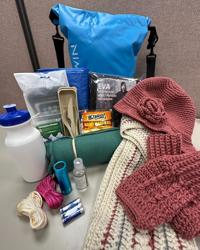
The Samaritan Center is urging those in need to take advantage of Winter Homeless Kits now available in the Ooltewah area.
If this weekend’s storm causes significant damage, TVA says the aerial data will allow crews to respond more quickly than ever before. Sanders said this will be the first major winter storm in which the agency can fully utilize the technology to assess damage.
“This is the first big winter storm that we’re going to have the opportunity to go and inspect and see the difference of what has changed and be able to utilize this equipment, this technology,” he said.
Sanders said the shift from traditional walking inspections to aerial mapping has been a game changer, improving safety and efficiency.
“Moving to this, which is even faster and safer, it really doesn’t make mistakes,” he said. “It directs us to the spots that need attention.”
He added that crews no longer have to search entire power lines to find a single issue.
“You know exactly where you’re walking to,” Sanders said. “You go straight to one location instead of looking at an entire power line to find that one tree.”
By May, TVA expects to have mapped about 6,000 miles of power lines — far more than could ever be accomplished through inspections on foot.

