
The dental market is shifting beyond expert clinicians. Modern practice owners should also be strategic entrepreneurs with thoughtful investment patterns. As a business owner, it is essential to understand the shift toward advanced implant technology. Beyond clinical upgrades, it is a calculated decision to increase profitability and streamline operations.
Prominent Advanced Implant Technologies for Dentists
Modern dentists have an interconnected ecosystem of advanced digital tools. While they seem like isolated gadgets, they work together to change the implant workflow. For example, cone beam computed tomography (CBCT) offers a multidimensional view of your jawbone, nerves, and sinuses. Researchers say it helps dentists improve diagnostic accuracy and image quality protocols.
Dentists are using 3D printers to create customized dental appliances and aesthetics. You can also use them to produce surgical guides. Your CBCT machine generates images to create a custom-made template that fits over the patient’s teeth. Using a 3D printer makes implant placement safer and more predictable. Surgeons and patients benefit from faster and less invasive surgery.
The Desire for Advanced Implant Technology
Dentist offices are devoting significant capital to advanced technologies. As a modern dental entrepreneur, you should understand what goes into the cost-benefit analysis for each advancement. Here are three reasons why implant technology has become more popular.
1. Higher Accuracy and Predictability
Surgeons used to rely on 2D X-rays and personal experience to determine implant locations. Modern technologies make the job easier and more efficient. Your CBCT scanner provides key information like bone density, width, and height. Once you obtain the information, you can more precisely locate the nerves and blood vessels to create a safe surgical plan.
Surgeons lock in the implant position on the computer before using a 3D printer to print the surgical guide. This appliance helps your surgical drill find the precise location and angle from the digital plan. Practice owners can benefit from reduced liability and fewer complications.
2. Increased Case Acceptance
Case acceptance depends on quality pictures and advanced visualization technology. Modern software elevates this sales pitch into a collaborative educational experience for all parties. Dentists can use interactive 3D models to show the patient their jaw on a large screen. If a bone graft is necessary, they can rotate the model and show deficiencies as further proof.
The visual evidence builds trust with patients by demonstrating why treatment is necessary. Once they see the anatomical reasons, they build trust with the practice. The process now includes the patient and gives them a sense of ownership.
3. Better Clinical Efficiency
Advanced implant technology benefits extend to the practice by enhancing efficiency. Surgeons use it to replace multistep physical processes with integrated and digital ones. The modern workflow requires one quick appointment to capture 3D digital models of the patient’s mouth. Their time in the chair is significantly shorter than in past processes.
Once planning is over, the office can use its in-house 3D printer and milling unit to create surgical guides. Faster, more efficient surgeries mean the office can schedule more patients each day. Therefore, your practice can earn more revenue from the same number of operatories.
Industry Leaders Leveraging Advanced Implant Technology
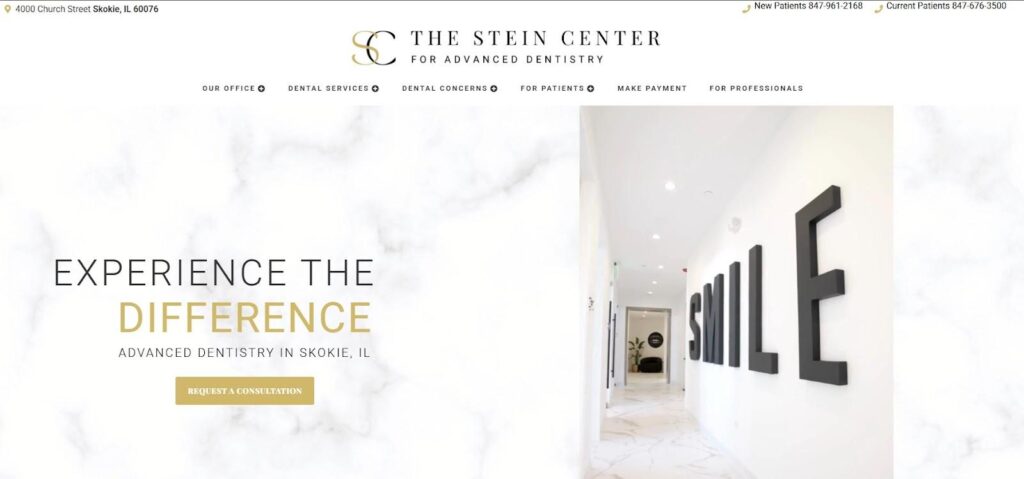
The Stein Center for Advanced Dentistry is an industry leader because it implements advanced technology. Its CBCT uses 3D X-ray technology to capture detailed images of the nerve pathway and bone structure. The office also features in-house milling technology for designing and fabricating ceramic crowns. Patients can get placement on the same visit.
The Stein Center for Advanced Dentistry’s 3D printer enhances patient experience. This machine produces clear aligners and resin-based restorations that blend with teeth. Complicated molds are a thing of the past, thanks to the office’s intraoral scanners. The wand-like scanner connects to a computer and makes the process cleaner.
Methodology
Efficient clinical and operational workflows depend on modern technology. The best practices differentiate themselves with advanced capabilities and the following criteria.
| In-house 3D imaging | In-house CBCT scanners are the gold standard. |
| Intraoral digital scanners | An intelligent digital scanner should capture a 3D model of a patient’s teeth. |
| Guided surgery discussion | The dentist must discuss the use of fabricated surgical guides. |
| Same-day technology | Same-day crowns and in-office milling signal significant investments in technology. |
| Digital treatment presentation | Advanced offices showcase specialized models on large screens. |
Advanced Tech and the Future of Dentistry
Dentists are going beyond clinical upgrades by making calculated business investments. Integrated technologies, such as 3D imaging and in-house fabrication, make your practice more resilient and trustworthy. The modern landscape requires embracing the digital revolution and heightening operational efficiency.
Frequently Asked Questions
What are the newest technologies in dental implants?
Surgeons are using computer-guided surgery, nanotechnology, and metal-free zirconia implants.
What is the 3/2 rule for dental implants?
Dentists measure 3 mm of bone width around implants and 2 mm between them to help blood flow.
What is the highest-quality dental implant material?
You should use durable titanium or aesthetic zirconia to protect bones and ensure longevity.
Grit Daily News is the premier startup news hub. It is the top news source on Millennial and Gen Z startups — from fashion, tech, influencers, entrepreneurship, and funding. Based in New York, our team is global and brings with it over 400 years of combined reporting experience.

