
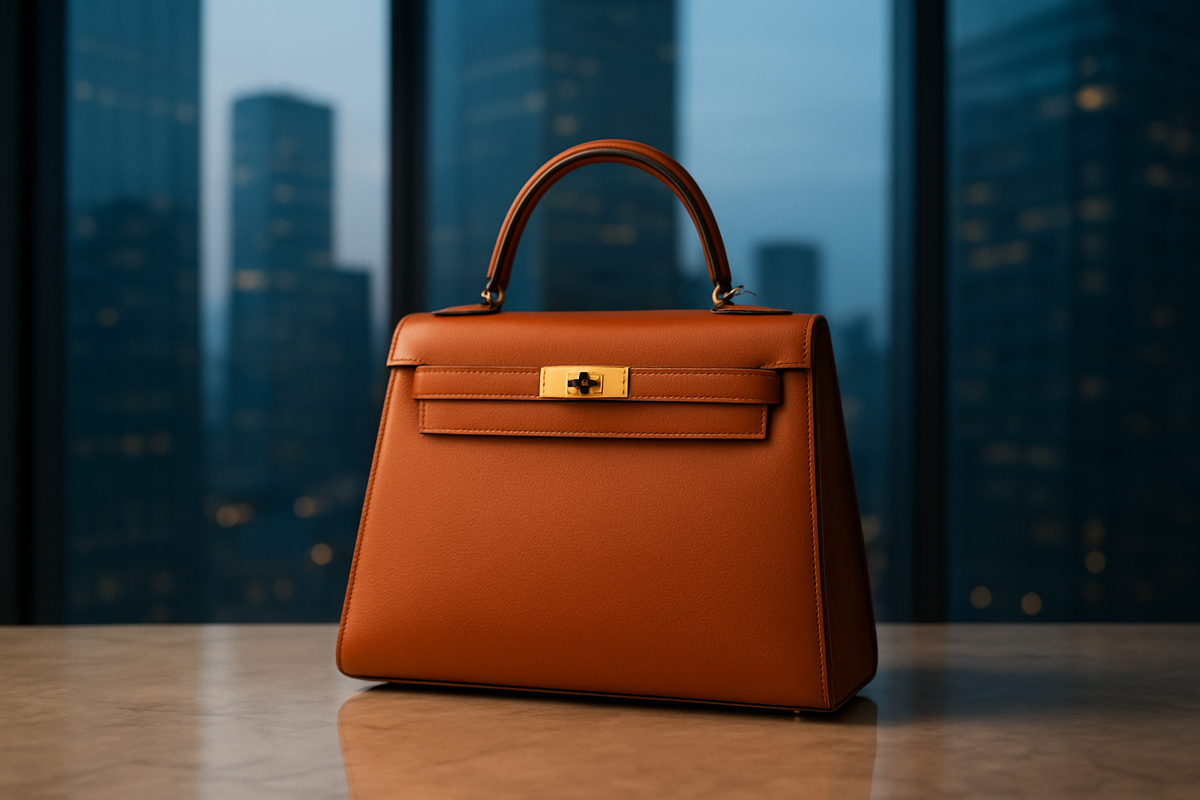
As the global economy navigates a complex tapestry of lingering inflation and shifting geopolitical alliances in early 2026, the luxury sector has revealed a stark divide between the merely “premium” and the truly “exceptional.” While many high-end brands have spent the last year grappling with price fatigue and a pullback from aspirational shoppers, Hermès International (Euronext Paris: RMS) has once again demonstrated why it is considered the gold standard of the industry. By focusing on ultra-high-net-worth individuals (UHNWIs) and a supply-constrained business model, the French maison has effectively insulated itself from the macroeconomic headwinds that have battered its peers.
The resilience of Hermès is not just a success story of leather goods; it is a barometer for the health of the world’s most affluent consumers. As of February 2026, the company’s ability to maintain double-digit growth in its core segments while others face stagnation suggests that the “top 0.1%” remain largely unaffected by the volatility that has defined the broader markets over the past 24 months. This performance underscores a fundamental shift in luxury consumption: a move away from logo-heavy status symbols toward “investment-grade” assets that retain value in uncertain times.
Hermès entered the first quarter of 2026 on the heels of a blockbuster 2025 fiscal year. The company reported consolidated revenue of €16 billion, representing a 9% organic increase compared to the previous year. Even more impressive was its operating margin, which expanded to a best-in-class 41.0%, generating a recurring operating income of €6.57 billion. While the fourth quarter of 2025 saw some softening in discretionary categories like watches (-2%) and perfume (-8%), the core Leather Goods & Saddlery division—the home of the iconic Birkin and Kelly bags—surged by 14.6%. This segment continues to act as the company’s ultimate hedge against market downturns, with demand consistently outstripping supply.
The timeline of this outperformance is particularly noteworthy when viewed against the broader luxury “normalization” that began in late 2024. As global central banks held interest rates higher for longer than many anticipated, the “aspirational” consumer—those who occasionally splurge on entry-level luxury—largely retreated. Hermès, however, skillfully avoided this trap by leaning into its “Venturing Beyond” strategy for 2026. CEO Axel Dumas confirmed in a recent briefing that the brand will implement a measured 5–6% price hike this year, a slight deceleration from the 7% increases seen in 2025, aimed at offsetting rising craftsmanship costs without alienating its core base.
Geographically, the Hermès story in 2025 was one of strategic divergence. While the broader Chinese market struggled with a prolonged property crisis, Hermès managed an 8% growth rate in the Asia-Pacific region (excluding Japan). In Japan itself, growth soared by 14%, fueled by a combination of a favorable exchange rate for tourists and a robust local appetite for high-end craft. Meanwhile, the United States emerged as a primary growth engine, with the Americas region growing 12.1% in the final quarter of 2025. This prompted the company to double down on the American market, recently acquiring prime real estate on Rodeo Drive to solidify its physical footprint in the luxury capital of the West.
The Great Luxury Divide: Winners and Losers
The early 2026 landscape has crystallized a “K-shaped” recovery within the luxury sector. On one side are the “valuation outliers” like Hermès and Brunello Cucinelli S.p.A. (Borsa Italiana: BC), which have benefited from the “Quiet Luxury” or “Stealth Wealth” trend. Cucinelli, in particular, has seen its stock price climb as UHNWIs pivot toward understated, ultra-premium apparel. These brands have successfully marketed themselves as purveyors of timeless quality rather than fleeting fashion, allowing them to maintain pricing power even as consumer sentiment fluctuates elsewhere.
Conversely, the “restructuring giants” are facing a more difficult path. LVMH Moët Hennessy Louis Vuitton (Euronext Paris: MC), the world’s largest luxury group, reported a more modest 2025 with organic revenue dipping 1%. While its selective retailing arm—driven by the powerhouse Sephora—remained a bright spot, its fashion and leather goods divisions, including Louis Vuitton and Dior, faced headwinds from a cooling Chinese market and currency volatility. LVMH has signaled that 2026 will be a year of “cost discipline,” focusing on brand desirability rather than aggressive expansion.
The situation is even more critical for Kering SA (Euronext Paris: KER). The group spent 2025 in a major “reset” mode, seeing a 10% decline in comparable revenue. In a drastic move to streamline operations, Kering sold its beauty division to L’Oréal (Euronext Paris: OR) for approximately €4 billion and announced plans to shutter 75 underperforming stores globally in 2026. Under the new leadership of CEO Luca de Meo, Kering is attempting a radical turnaround for its flagship brand, Gucci, which has struggled to find its footing after a series of creative and strategic shifts.
A Fundamental Shift in the Luxury Moat
The current state of the market suggests that the very definition of a “luxury moat” has evolved. In the 2010s, a moat was built on brand awareness and massive marketing budgets. In 2026, the moat is defined by scarcity, craftsmanship, and the “VIC” (Very Important Client) relationship. Hermès has mastered this by treating its products not as consumer goods, but as an asset class. For many investors and high-end collectors, a Birkin bag is now viewed with the same financial seriousness as a blue-chip stock or a piece of fine art.
This trend fits into a broader historical precedent where, during periods of economic transition, capital tends to flow toward “hard” luxury. We saw similar patterns during the 2008 financial crisis and the 2020 pandemic recovery, but the 2025-2026 cycle is unique in its focus on “quiet luxury.” The rejection of ostentatious logos by the ultra-wealthy is a direct response to a global environment where wealth inequality is under increasing scrutiny. By offering “if you know, you know” products, brands like Hermès and Loro Piana (owned by LVMH) allow their clients to enjoy luxury without the social friction often associated with visible branding.
Furthermore, the rise of “experience-based luxury” is creating a ripple effect across the industry. Wealthy consumers are increasingly allocating their budgets toward bespoke travel and ultra-luxury hotels rather than just physical goods. This has forced traditional houses to adapt, with Hermès expanding its lifestyle and home collections, and LVMH continuing its aggressive expansion into the hospitality sector. The regulatory environment is also shifting; as sustainability and “right to repair” laws tighten in the EU, Hermès’ long-standing focus on longevity and artisanal repair services has positioned it as a natural leader in the “circular luxury” economy.
Looking toward the remainder of 2026 and into 2027, the primary challenge for the luxury sector will be managing the balance between exclusivity and growth. For Hermès, the strategy remains clear: controlled growth through meticulous supply management. The company plans to open only one or two new leather production sites per year, ensuring that the “waitlist” remains a core part of the brand’s allure. This scarcity-driven model is expected to keep the brand’s resale value high, further cementing its status as an investment-grade purchase.
For the rest of the market, the short-term focus will be on the “H2 2026 recovery.” Analysts at major financial institutions are projecting a total sector growth of 3–5% for the year, with a significant uptick expected in the second half as interest rate cuts in the US and Europe begin to stimulate broader consumer confidence. However, the “aspirational” segment may not return to its 2021 peaks for several years, forcing brands like Burberry or Ralph Lauren to pivot their strategies toward higher-end, more exclusive collections to capture the resilient UHNWI spend.
Strategic pivots are already underway. We should expect to see more consolidation in the luxury space, as cash-rich leaders like Hermès and LVMH look to acquire smaller, heritage-rich brands that have struggled during the recent downturn. Additionally, the integration of AI in personalized clienteling—allowing brands to predict and cater to the specific tastes of their top 1% of clients—will likely become the new technological frontier for the industry in the coming 12 to 18 months.
Conclusion: The New Luxury Paradigm
As we move through the first quarter of 2026, the luxury market has proven that it is not a monolith. The spectacular performance of Hermès highlights a clear decoupling: while the middle-class “premium” market is sensitive to economic cycles, the ultra-luxury tier operates in a realm of its own. Hermès has successfully turned scarcity into a perpetual growth engine, proving that in a world of mass production, true craftsmanship is the ultimate currency.
For investors, the key takeaway is that quality and “moat depth” matter more than ever. The era of easy growth fueled by a rising tide in China and post-pandemic stimulus is over. Moving forward, the “winners” will be those who can maintain high margins through pricing power and deep-rooted client loyalty, rather than those who rely on volume. Investors should keep a close eye on the performance of the Leather Goods division at Hermès and the progress of the Gucci turnaround at Kering as lead indicators for the sector’s health.
Ultimately, the luxury sector in 2026 is undergoing a maturation process. It is shifting from a focus on “new wealth” and rapid expansion to a model of “preserved wealth” and sustainable desirability. Hermès, with its century-old focus on the long term, is not just participating in this new era—it is defining it.
This content is intended for informational purposes only and is not financial advice

