
The man in the white shirt and orange scarf does not look like a harbinger of catastrophe. Sat in front of a bookshelf and a modest camera set‑up, Craig Hamilton‑Parker could be any middle‑aged YouTuber. Yet to the hundreds of thousands who tune in to his videos, the self‑styled ‘Prophet of Doom’ is something far more dramatic: the man who claims to have seen the Queen’s death, the Covid pandemic and, now, a world sliding towards chaos in 2026.
It sounds outlandish. It always does at first. Then you remember that, not so long ago, the prospect of a US president musing about ‘buying Greenland’ would have been written off as satire. Now it’s a matter of diplomatic record.
Hamilton‑Parker is routinely described by devotees as a ‘New Nostradamus’, a label that he wears with a kind of weary pride. Working with his wife Jane and drawing, he says, on sessions with spiritual mediums and ancient Indian Nadi texts, he has stitched together a vision of the next few years that is bleak, occasionally bizarre – and uncomfortably plugged into the raw nerves of current geopolitics.
‘New Nostradamus’ Sees Trump Clinging To Power In 2026
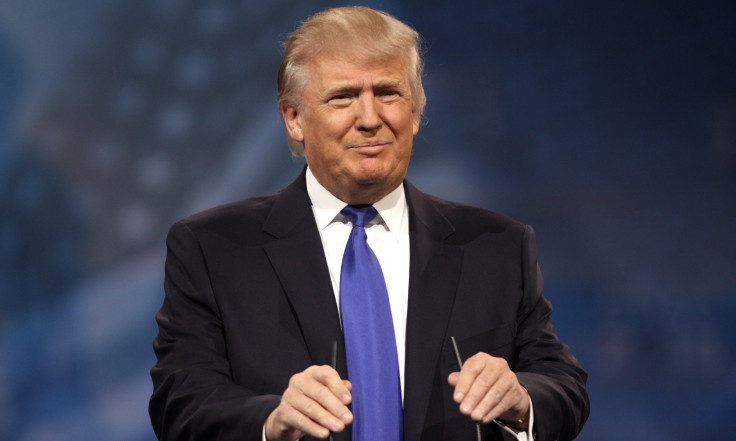
Gage Skidmore from Peoria, AZ, United States of America, CC BY-SA 2.0 , via Wikimedia Commons
The prediction that will make headlines – and delight conspiracy theorists – concerns Donald Trump. Asked by a viewer whether the former president could somehow manage a third or even fourth term, Hamilton‑Parker did not laugh it off. Quite the opposite.
He insists he first ‘saw’ the scenario during Trump’s second term, and now links it to what he describes as a looming global conflict that could make normal democratic procedure impossible.
‘To reiterate what I said at the time, I felt there would be some big global conflict, possibly involving Taiwan,’ he said. ‘Looking at it now, it could be any global conflict… you cannot have a third term because it is written in the Constitution – but who knows? Things have changed so much in the world.’
This is the thread he keeps pulling: that the rulebook is only as sturdy as the crises that test it. He rattles through recent examples that, in fairness, would have sounded deranged a decade ago – talk in Washington of acquiring Greenland, the brazen abduction of a sitting president in Venezuela.
In his 2026 timeline, some undefined emergency allows ’emergency powers’ to be invoked in the US. The election is postponed, or reshaped beyond recognition. ‘Something will occur that overturns the existing rules, and that period will be a time of great conflict,’ he claims.
It’s melodramatic, but it’s not plucked from nowhere. He leans heavily on the Nadi oracles of India – palm‑leaf prophecies that have been mythologised for centuries – which he says warned of an eventual China‑Russia axis against the US, a configuration he began talking about back in 2015 when Beijing and Moscow were hardly close.
‘At the time, it seemed impossible… Yet I saw them joining together in conflict with the USA. So could that be what I’m seeing now? Or could it involve Iran instead? My feeling is that around that period, we will see many conflicts emerging in 2026.’
Whether one credits the source or not, it is hard to deny that the world is, at the very least, obligingly aligning itself into the blocs he describes.
‘New Nostradamus’ Forecasts Gas Cloud Over Japan And Cyber Shock
If American constitutional drama weren’t enough, Hamilton‑Parker’s 2026 dossier goes further. Buried in a book he published back in 2015 – Messages from the Universe – is a passage that he now reads as a warning about Japan.
‘In one of my Nadi readings, it suggested that I would warn the world about a country being completely enveloped in a gas cloud,’ he says. Only later, he insists, did further readings narrow it down: northern Japan, around August 2026.
He is maddeningly vague on the cause. Natural disaster? Industrial accident? Something darker? ‘Could something like a bomb be used to intensify a gas cloud or volcanic activity? That would suggest a clandestine form of attack,’ he suggests, floating the idea without quite pinning his flag to it.
Here, at least, he moderates the doom. The Nadi tradition, he argues, stresses that the future is ‘fluid,’ and he frames his warning as an attempt to soften the blow through ‘positive thoughts, prayers, and visualisations.’ To sceptics, that will sound suspiciously like hedging: if nothing happens, the future has been changed; if something does, the prophecy stands.
Alongside the physical threat, he sees a digital one. 2026, in his telling, could also be the year of a major cyber event that batters cryptocurrencies, industry and ‘even the AI market.’ Gold, he says, will spike and then slump. ‘Make sure you back everything up and don’t rely solely on cloud storage. This could be bigger than anything we’ve seen before.’
Strip away the mysticism and it reads uncomfortably like the kind of briefing given in hushed tones in Whitehall: financial systems are fragile; ransomware gangs are getting braver; no one really knows what happens if the wrong platform goes down at the wrong time. His language is alarmist, but the anxiety isn’t exotic. It’s already here.
Prophecies Of Iran, Greenland And A World After NATO
Hamilton‑Parker’s gaze roams widely. On Iran, he claims to have long foreseen attacks on its nuclear infrastructure – which, in various forms, have already taken place – and now talks about a ‘very targeted’ follow‑up in March 2026.
‘I do not sense boots on the ground – rather, airstrikes and swift action,’ he says, extending the arc of conflict to include strikes on Yemen before a rapid de‑escalation. This, in his view, ushers in a period of intense internal unrest in Iran that could, eventually, tilt towards something better: ‘a new Iran… with freedom and rights for women.’ It is prophecy with a faintly liberal gloss.
Then there is Greenland. The idea of the vast, ice‑laden territory somehow becoming American sparked ridicule when Donald Trump floated it. Hamilton‑Parker does not see tanks on the tundra; he sees contracts.
‘It’s really about real estate – oil reserves and, most importantly, rare earth metals,’ he argues, predicting a huge economic deal, ‘very large payments’ and Greenlanders being persuaded, in the end, that the investment justifies the unease.
He jumps, almost conversationally, to another controversial set of islands: the Chagos archipelago in the Indian Ocean, whose inhabitants were forcibly removed under a UK‑US defence agreement in the 1960s. The current dispute over returning sovereignty to Mauritius, he says bluntly, is ‘madness’ and will ‘backfire’ on Keir Starmer, whom he accuses elsewhere of trying too hard to cosy up to China.
China, in fact, is the final gravitational centre of his world view. A recent purge of senior military figures, he argues, has left Beijing under the sway of leaders who might gamble on Taiwan. Economic strain could spill into political unrest. ‘Economic problems in China could trigger political unrest, which will dominate global attention in 2026,’ he says.
Within that turbulence, he predicts NATO will weaken and, by around 2030, a new international ‘policing body’ will emerge from the rubble of today’s alliances – a pragmatic structure born of exhaustion after too many crises. The UN, he dismisses as having been ‘toothless’ for decades.
It is, taken as a whole, a dark mural: emergency rule in Washington, unseen gas over Japan, airstrikes in Iran, a fraying NATO and cyberattacks humming in the background. Yet he insists on ending with optimism, insisting these are ‘the last stages of the difficult age before a better one comes.’
Whether that is sincere hope or a necessary sugar‑coating for the faithful is, like so much in Hamilton‑Parker’s universe, a matter of belief. But the popularity of this ‘New Nostradamus’ tells its own story. In an era where reality keeps outpacing fiction, a man calmly sketching out the next disaster is not a fringe curiosity. He’s part of the furniture.

