

Key Points

- WARC forecasts global ad spending will rise 10.4 percent to $1.32 trillion, but warns geopolitical risks could disrupt growth.
- A prolonged energy crisis tied to the Iran conflict could cut nearly $50 billion from global ad spending.
- Advertisers face potential pressure from rising oil prices, inflation and weaker consumer spending.
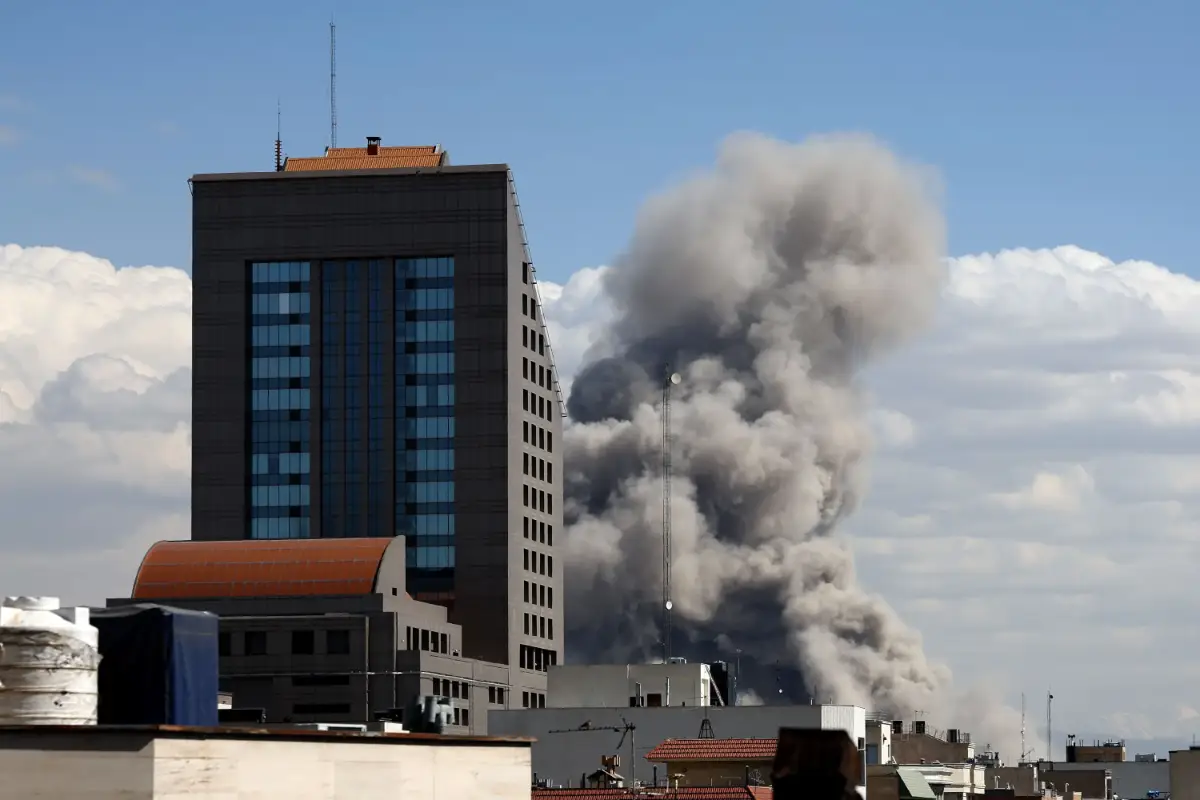
Global advertising spend is expected to rapidly increase this year, based on prior forecasts issued by WARC Media — but the marketing intelligence firm now says geopolitical uncertainty caused by ongoing military action against Iran has the potential to change its outlook for the year.
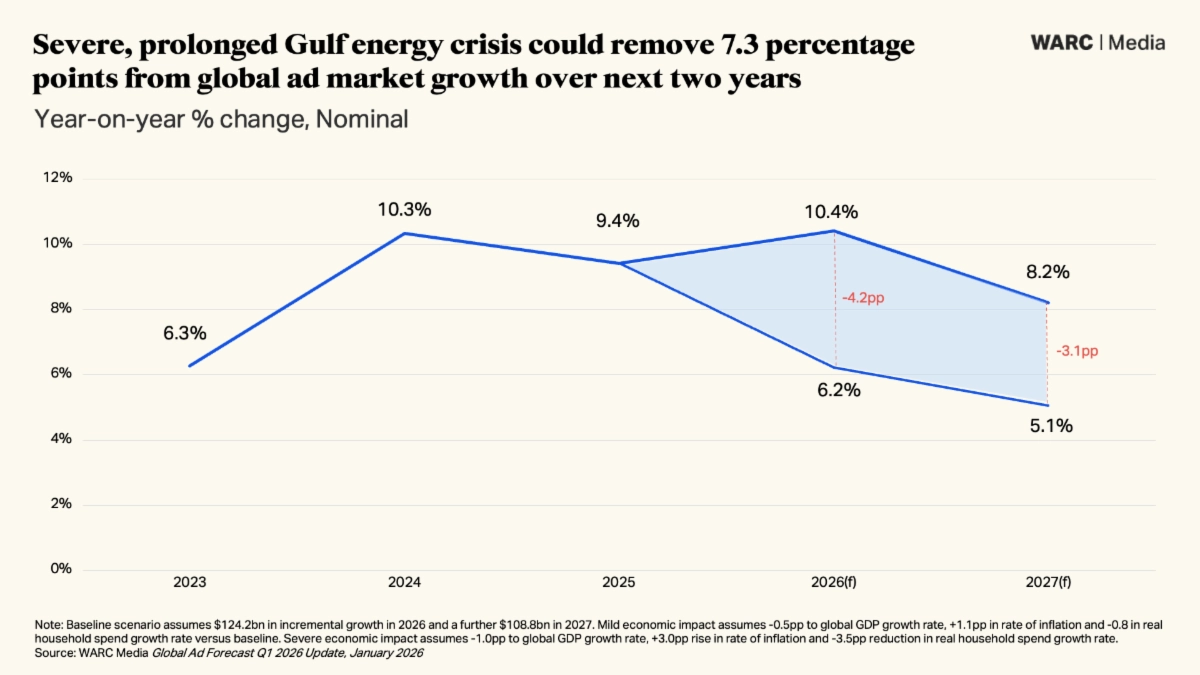
In an updated sent this week, WARC now forecasts global ad spending will rise 10.4 percent this year to reach $1.32 trillion, an upward revision from its prior estimate — but the firm cautioned that a prolonged energy crisis spurred by the ongoing Gulf region crisis could erase nearly $50 billion from that total, reducing growth by approximately 4.2 percentage points.
So far, the advertising market has been able to withstand the effects of other politically-motivated elements, including tariffs imposed by the Trump administration, some of which are being rolled back through legal challenges.
That resilience may be tested if elevated oil prices and supply chain disruptions persist, particularly as advertisers contend with weakening consumer purchasing power, WARC warned in its update this week.
In a best-case scenario, the crisis is resolved quickly and oil prices start to stabilize after a temporary spike to around $100 per barrel. Under those conditions, the broader advertising market would remain largely intact, with only limited pullbacks.
Travel and transportation advertisers would see the most pronounced impact, reducing spending by 3.5 percent compared to 2025, or about $1.3 billion. Other sectors — including automotive, food, leisure and entertainment, and technology — would maintain relatively strong ad investment levels. In this scenario, overall ad growth would exceed WARC’s prior December forecast by 1.3 percentage points.
A more moderate scenario assumes elevated oil prices persist for several years. In that case, 2026 ad growth would decline by 1.6 percentage points, representing a loss of roughly $19 billion, followed by an additional $13.3 billion decline in 2027. WARC compared this scenario to the economic conditions surrounding the 1991 Gulf War, noting that sectors like food could see ad spending forecasts cut in half due to supply chain disruptions.
The most severe scenario draws parallels to the 1973 oil crisis, with sustained inflation, weakened consumer confidence and stagnating or declining ad spending across major categories. Even in that outcome, WARC projects global advertising would still grow 6.2 percent in 2026, though momentum would slow considerably heading into 2027.
“An oil shock of this nature acts like a tax on consumers — pushing up prices while eroding real spending power,” said James McDonald, WARC’s Director of Data, Intelligence and Forecasting. “In a more prolonged or severe disruption, we move into stagflation territory.”
Looking ahead, WARC also anticipates a cooling in social media advertising growth. Platforms like Instagram are expected to see annual ad growth slow to 15.5 percent in 2027, down from nearly 27 percent growth this year, while TikTok is projected to remain above 20 percent growth but with a sharply reduced pace compared to prior years.
More Stories

