
Still, Brussels insists that renewed momentum will not dilute standards: progress must remain strictly merit based. The real test now is whether this political reawakening can deliver concrete advances for the Western Balkans, Ukraine, and Moldova, turning enlargement from rhetoric into reality. The current EU’s Enlargement dilemma is between the geopolitical urgency and the need of keeping the process on merit-based rules. Is enlargement real this time? How long will this window of opportunity remain open? We asked this question to seven distinguished experts.
 EU Enlargement in a Geopolitical Age – by Stefan Lehne, Senior Fellow at Carnegie Europe and Lecturer at the Diplomatic Academy of Vienna
Most previous EU enlargement had a geopolitical dimension, whether the objective was to consolidate democracy in Europe’s soft underbelly or filling the void left by the collapse of the Soviet empire. However, in each case, geopolitics remained in the background. The enlargement process focused on taking over the EU’s legislation and adjusting the institutions.
The accession of Ukraine and to some extent of Moldova will be different. Geopolitics will be in the front and center of the process. The stakes will be higher and the timing more sensitive. Inevitably, there will be tension between “needs-based” and “merits based,” between the urgency of anchoring post-war Ukraine in the West and the time necessary to adopt EU law and creating the capacity to implement it well. The EU’s approach will have to adjust to new situation. There will be a need for long transitional periods, and a considerable part of the technical work might have to follow rather precede accession. The entire financial dimension will look different from earlier accessions, as it needs to respond to Ukraine’s reconstruction needs. Also, for the first time, defense matters will be an important part of the process.
These adjustments must not, however, in any way diminish the transformative character of enlargement. A sustained process of reforms and significant progress in the rule of law standards will be crucial to achieve the double objective of Ukraine’s accession: to gain a strong partner safeguarding European security and to ensure Ukraine’s future as a self-determined and successful state.
 Geopolitical Enlargement Without Democratic Guarantees – by Dimitar Bechev, Director of the Dahrendorf Programme at the University of Oxford and Senior Fellow at Carnegie Europe
The European Union is clearly in enlargement mode, and geopolitics — namely the need to counter Russia — is a major driver behind this renewed momentum. It is not difficult to foresee Montenegro, Albania, and perhaps even North Macedonia or Moldova joining the EU in the 2030s.
I remain skeptical, however, that this expansion will automatically deliver gains in terms of the rule of law and democratic consolidation. There is little in the EU’s recent experience — particularly following the post-2004 enlargement to Central and Eastern Europe — to suggest that stagnation or even democratic backsliding is not a real possibility for the next wave of entrants.
The good news is that Europe could likely absorb countries that are only partially reformed and still prone to state capture. The potential damage to EU integration — whether to the integrity of Brussels institutions or to other member states — would probably be limited. What happens in Chișinău or Tirana largely stays there, with figures like Edi Rama potentially borrowing Viktor Orbán’s iconoclastic rhetoric while stopping short of mounting a direct challenge to the European project.
Further democratization and reform will therefore rest primarily with the citizens of these countries, rather than with external stakeholders. For a geopolitical enlargement to fully deliver on its promise, agents of change in politics, civil society, and business must be able to engage in collective action against vested interests and build coalitions across Europe, including with the European Commission and the European Parliament.
 EU Enlargement as Transformation – by Nicolò Russo Perez, Director, CSF Foundation / Compagnia di San Paolo
In a rapidly changing world, where new opportunities are often overshadowed by new anxieties, the dilemma of EU enlargement is as much about European integration as it is about European transformation. With war having returned to the European continent and authoritarian actors increasingly challenging European interests, enlargement has once again become a deeply geopolitical affair. Yet across European capitals and among public opinion, there remains a need to fully articulate why enlargement should be understood as a mutually beneficial process — one that is also grounded in shared values.
Enlargement has been, and should continue to be, a process of domestic transformation, not merely a foreign policy objective. Ordinary citizens must be able to feel that accession to the European Union will translate into more democratic, more participatory, and better-governed societies. Across the Western Balkans and beyond, citizens — particularly young people — are demanding respect for human rights and fundamental freedoms, at times taking to the streets to make their voices heard.
In this context, a more geopolitical European Union — one that finally aspires to act as a strategic actor in its own right — should also become more firmly united around democracy, the rule of law, and the freedoms that remain central to any shared definition of a good society.
European civil society organizations and foundations are increasingly reaffirming their commitment to the Western Balkans. In Italy, the CSF Foundation, part of the Compagnia di San Paolo — a non-profit, non-partisan private foundation based in Turin with roots dating back to 1563 — has recently launched the first Enlargement Pulse Colloquium. Conceived as an annual gathering, the initiative brings together experts, policymakers, and future leaders to “take the pulse” of the enlargement process and jointly shape Europe’s agenda for the years ahead.
The moment should be seized to win the hearts and minds of public opinion, both within EU member states and across the Western Balkans, and to reaffirm a simple but essential message: enlargement lies at the very core of the European project — a project that must continue to be one of transformation.
Until Europe is truly whole, free, and at peace, the vision of the European Union’s founders will remain unfulfilled.
 Enlargement at a Crossroads: the Cost of Inaction – by Engjellushe Morina, Senior Policy Fellow at the European Council on Foreign Relations (ECFR), Berlin
The European Union currently has nine candidate countries for accession, but four of them — Albania, Moldova, Montenegro, and Ukraine — could potentially become members by the end of 2030. According to the EU’s enlargement commissioner, Marta Kos, Montenegro could be ready to become the 28th EU member by 2028, followed by Albania as the 29th in 2029. Ukraine and Moldova, meanwhile, could be in a position to conclude accession negotiations by 2028 and formally join the EU by 2030.
Despite these optimistic projections, the path to membership remains fraught with both domestic challenges in candidate countries and political resistance within the EU itself. Enlargement is far from universally supported among member states. Ukraine, in particular, remains a highly controversial candidate. The scale of its wartime and post-war reconstruction needs, persistent concerns over corruption and governance, and unease among some capitals about integrating a country still at war with Russia into the EU’s core have all complicated its bid. Hungary blocked Ukraine’s accession process in mid-2025, underscoring how vulnerable enlargement remains to internal EU vetoes. The financial burden is also significant: Ukraine’s reconstruction alone is expected to cost hundreds of billions of euros.
Even the frontrunners — Albania, Moldova, and Montenegro — which have shown willingness to push through demanding institutional reforms to move closer to membership, face obstacles originating on the EU side. Beyond lofty rhetoric about the strategic necessity of enlargement, the bloc still lacks a clear plan of action, a genuine consensus among member states, and the political will required to reform its own institutions to accommodate new members.
By failing to articulate and deliver a credible and timely enlargement strategy, European leaders risk undermining not only the accession process itself, but also the broader foundations of European security, prosperity, and democracy. Ultimately, continued hesitation threatens the EU’s credibility as a global actor at a time when its geopolitical relevance is being actively tested.
 Between Geopolitics and Merit: – by Isabelle Ioannides, Senior Fellow at ELIAMEP and Founding Member of Europe’s Futures Initiative
EU enlargement has consistently been driven by geopolitics while simultaneously constrained by the need to reconcile divergent member state interests, given that accession requires unanimity in the European Council. The 2004 “big bang” enlargement and the 2013 accession wave were largely about consolidating post–Cold War gains in Central and Eastern Europe, strengthening democratic institutions, and fostering economic prosperity.
The forthcoming enlargement to the Western Balkans and the Eastern Trio — Ukraine, Moldova, and eventually Georgia — is set to be the most geopolitically consequential yet, as it fundamentally concerns the future of the European Union itself. Russia’s unlawful aggression against Ukraine has unequivocally elevated enlargement to an existential priority for the EU, both to preserve its global relevance and to reinforce its security in an era of intensified geopolitical rivalry. At the same time, US President Donald Trump’s continued unpredictability, including efforts to sideline the EU from Ukraine–Russia peace talks, has further underscored the imperative for European unity and strategic autonomy.
Yet achieving unanimity on enlargement in today’s polarized political landscape remains a formidable challenge. After years of enlargement fatigue, several new features of the accession process could nevertheless help restore confidence. The 2020 enlargement methodology reduced member state veto points in the Council, while initiatives introduced in 2024 on gradual integration have accelerated economic convergence with the single market, prioritized alignment with the EU’s Common Foreign and Security Policy sanctions, and empowered Western Balkan candidates to play a more active role in shaping their own reform paths.
At the same time, a merit-based approach remains at the core of the accession process, with respect for the rule of law a non-negotiable prerequisite for several member states. Despite ongoing debates over the EU’s internal reform and absorption capacity, the Lisbon Treaty already provides the legal conditions necessary to integrate smaller new members without treaty change.
While this may not fully resolve the EU’s broader geopolitical dilemmas, the convergence of these factors could make enlargement a tangible reality by 2030.
The author is a senior policy analyst at the European Parliamentary Research Service. The views expressed are solely those of the author and do not represent an official position of the European Parliament.
 Why EU Enlargement Remains a Strategic Imperative – by Ivan Vejvoda, Fellow at the Austrian Institute for International Affairs and Co-founder of the Europe’s Futures Initiative
The dilemma surrounding EU enlargement is, in many ways, a familiar one. When Bulgaria and Romania joined the European Union in 2007, the underlying question was strikingly similar, even if the historical context was different. Their accession was the right geopolitical decision, accompanied by a rules-compliance framework through the Cooperation and Verification Mechanism (CVM).
Today, EU enlargement has become an absolute strategic geopolitical imperative in the aftermath of Russia’s invasion of Ukraine. The Union must move boldly beyond its repeated declarations about the need to enlarge. The EU’s credibility is at stake. Twelve years without a new member state since Croatia’s accession is simply too long. Russia, in particular, is actively working to undermine the EU and Europe by exposing their perceived weaknesses.
Merit remains central to the accession process and must neither be disregarded nor abandoned. The rule of law is fundamental, and candidate countries must not receive a free pass into membership. This is precisely why gradual accession — advocated for many years — has become a crucial mechanism to bridge the gap between geopolitical urgency and merit-based conditionality.
Geopolitics and geography matter more than ever, but merit has always been an integral part of enlargement. It is not a binary choice. If the EU fails to enlarge to the Western Balkans — a region of around 16 million people, demographically comparable to the city of Istanbul — and to advance Moldova and Ukraine along a gradual path to integration while upholding basic standards, it risks forfeiting one of its most successful policies: enlargement itself.
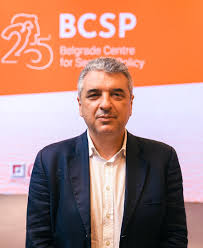 Beyond the False Dilemma – by Dr. Ioannis Armakolas, Senior Research Fellow at ELIAMEP and Director of the Think Nea Initiative
The dilemma often presented between geopolitics and merit in EU enlargement is, in reality, largely false. Enlargement has stalled not because geopolitical imperatives or merit-based rules were previously absent, but because the European Union has been politically indecisive and slow to act. Too often, it has been unwilling to reward bold reform, sanction democratic backsliding, or make courageous geopolitical choices that would turn the promise of accession into reality. This hesitation has discouraged the few genuine islands of reform in the region, strengthened its most autocratic leaders, and created openings for geopolitical rivals to deepen their influence.
Europe will become truly geopolitical — and will foster genuine, reform-driven accession — only when it demonstrates its readiness to respond decisively to the major challenges of this turbulent era. This requires preparing to complete the European project by fast-tracking necessary internal EU reforms, admitting the most prepared candidates before the end of the decade, and signaling to more reluctant countries that geopolitical ambivalence is no longer a sustainable political currency. Societies in accession countries must be encouraged to turn the page, so they do not miss the train of European integration.
Enlargement will also become a geopolitical asset when the EU recognizes the potential that accession countries bring to its readiness for global challenges and begins to tap into their underused capacities. This means understanding that accession countries are not a burden but an asset — a source of strength for Europe’s strategic autonomy, defense preparedness, and economic security — and acting confidently on this insight through bold and forward-looking policymaking.
