
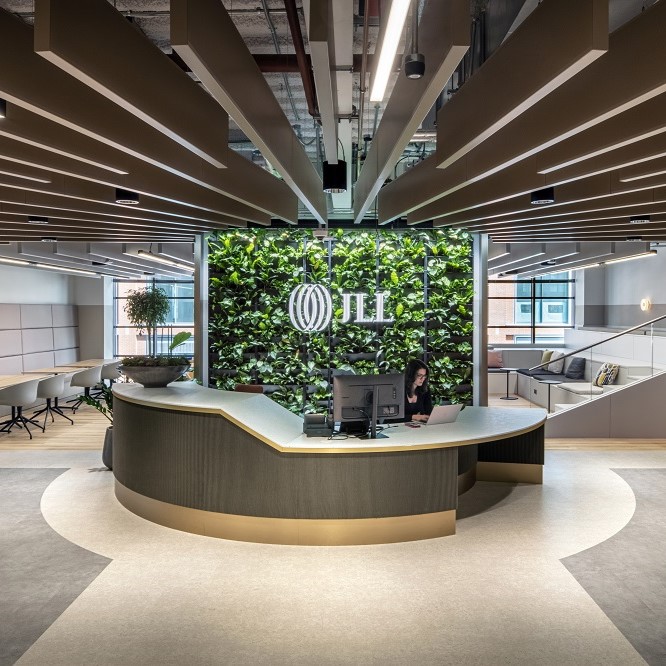
 The cost of fitting out office space around the world has risen by up to 6 percent over the past year, as geopolitical instability and growing technological demands combine to reshape corporate real estate strategies, according to new research from JLL. The firm’s 2026 Global Office Fit-Out Cost Guide, which analyses 68 cities, identifies a complex mix of factors behind the increase, including higher energy prices, supply chain disruption and ongoing shortages of skilled labour.
Global benchmark costs for a medium-quality office now stand at around 2,150 dollars per square metre, reflecting sustained upward pressure despite some stabilisation in material prices during 2025. A key driver is the growing complexity of workplace technology, particularly as organisations invest in infrastructure to support artificial intelligence. Mechanical and electrical systems, along with core construction works, account for the largest share of fit-out budgets and are increasingly affected by rising material costs and specialist labour shortages.
Geopolitical tensions are also playing a significant role. Trade tariffs and wider uncertainty were cited as a cost factor in more than 60 percent of markets surveyed, contributing to volatility in pricing and procurement.
JLL suggests that the combination of these pressures marks a shift away from more predictable cost environments. Rather than a single dominant factor, organisations now face what it describes as compounding complexity, with multiple influences converging on project budgets.
The report highlights that labour shortages remain widespread, affecting more than half of markets globally, while energy costs continue to fluctuate. At the same time, the increasing integration of advanced technologies into office design is adding further layers of cost and technical requirement.
Regional differences persist, with North America remaining the most expensive location for office fit-outs, driven in part by labour constraints and tariff-related cost increases. The findings point to a more challenging environment for occupiers and developers, with cost management becoming a central concern. JLL notes that organisations are likely to place greater emphasis on strategic planning and procurement as they seek to manage risk and maintain cost certainty in an increasingly volatile market.

