
The world today feels restless. News headlines are filled with wars, political tension, economic struggles, and fear about the future. Many people ask the same question: Why does the world seem so divided? To understand modern global conflicts, we must look beyond daily news and examine how history, power, and human decisions shape world affairs.
Conflict is not new. For thousands of years, nations and empires have risen and fallen. Wars have been fought over land, resources, religion, and control. What changes over time is not human nature, but the scale and impact of conflict. In today’s connected world, a crisis in one region can affect the entire planet.
In earlier centuries, empires expanded through military strength. The Roman Empire, Persian Empire, and later European colonial powers all fought wars to gain territory and wealth. These conflicts were often justified using noble language, but at their core, they were about power. Ordinary people paid the highest price through loss of life, poverty, and displacement.
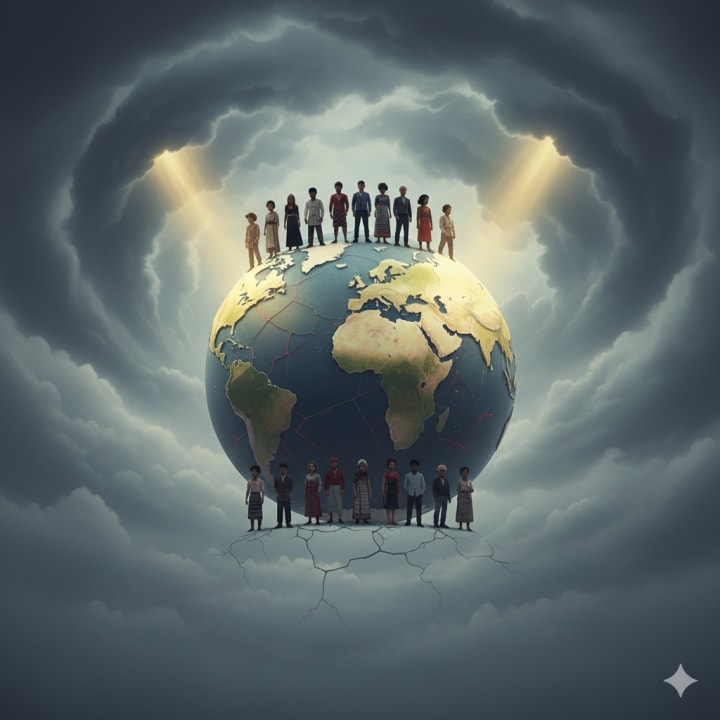
As history moved forward, the modern nation-state emerged. Borders were drawn, sometimes without respect for local cultures or communities. This created long-term tension in many regions, especially in parts of Africa, the Middle East, and South Asia. Problems that seem “new” today are often the result of old decisions made decades or even centuries ago.
The 20th century brought two world wars that changed everything. World War I and World War II showed how destructive global conflict could be. Millions died, cities were destroyed, and entire societies were shaken. After these wars, world leaders promised cooperation and peace. International organizations were formed to prevent future disasters. Yet, conflict never truly disappeared.
During the Cold War, the world was divided into rival power blocs. While direct war between major powers was avoided, many smaller wars were fought through influence, weapons, and ideology. These proxy wars left deep scars in developing nations and created instability that still exists today.
In the modern era, conflicts often involve a mix of politics, economics, identity, and fear. Control of resources such as oil, water, and trade routes plays a major role. Political leaders sometimes use strong language to gain support, even when it increases tension. Social media spreads information quickly, but it also spreads fear, anger, and misinformation.
Another challenge is misunderstanding between cultures. When people do not understand each other’s history or values, stereotypes grow. Religion, culture, or nationality can be blamed for problems that are actually political or economic. This misunderstanding makes dialogue harder and conflict easier.
Despite these challenges, history also shows us something important: war is not inevitable. There have been moments when diplomacy, patience, and cooperation prevented disaster. Peace agreements, international law, and humanitarian efforts have saved lives. These successes rarely make headlines, but they matter.
Citizens also play a role in world affairs. When people ask questions, seek accurate information, and reject hate, they reduce the power of fear-based narratives. Education helps societies understand that global problems are complex and cannot be solved with violence alone.
The biggest lesson from history is clear. When power is pursued without responsibility, conflict follows. When leaders ignore human life, suffering increases. But when justice, dialogue, and cooperation are prioritized, peace becomes possible.
The world today stands at a crossroads. Technology connects us more than ever, but it also magnifies division. The future depends on whether humanity learns from its past or repeats the same mistakes.
Understanding history does not solve every problem, but it gives us perspective. It reminds us that behind every headline are real people. And it teaches us that peace is not weakness—it is wisdom.

