
Rising concerns about war, safety and economic strain are taking up more of people’s mental space, leaving them feeling worn down rather than disengaged on climate. The Sustainability Sector Index 2026 from Kantar, the world’s leading AI-native marketing data and analytics company, finds that while concern about climate has softened year on year, demand for brands that deliver positive environmental and social impact remains strong.
Kantar’s survey of 13,000 people in 12 markets found that wars and conflicts (36%), environmental concerns (29%), the economy (28%) and crime and safety (20%) are consumers’ top issues. And while there has been a drop in climate concern year on year, concerns about violence, politics, and corruption each grew over the same period.
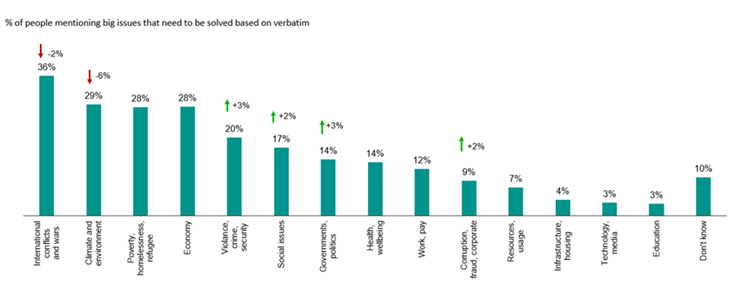
At the same time, 74% of respondents said they have tried or are open to try brands that have positive environmental or social impact (up 2%pts year on year), indicating that demand for more sustainable choices and lifestyles is still strong.
Commenting, Karine Trinquetel, Head of Offer, Sustainable Transformation Practice at Kantar, said: “Rising fears about global international war and economic fragility are taking up more space in people’s minds, making them stressed and overwhelmed. It might be tempting for brands to dial back on sustainability marketing but now is not the time to retreat. Brands that slow down will pay later because equity takes time to build and concerns around the environment will inevitably rebound. But it is essential to acknowledge the political and economic upheavals we are all living through and make the right choice the easy one for people to make.”
The study also reveals that there continue to be high levels of scepticism and concerns about greenwashing. Most people (57%) say they have seen, or heard, false or misleading information about sustainable actions taken by brands. The sectors seen to be most guilty of greenwashing are big tech (63%), news (62%) and energy (60%).
“Big tech brands attract concerns around the social division that can be sowed by their products, such as by platforming misinformation and introducing algorithm biases to the content they show.” Trinquetel added.
While worries about greenwashing are pervasive, not all sectors are affected by sustainability concerns to the same extent. Included for the first time this year is the Consumer Sustainability Pressure Index, which shows where sustainability expectations are hardest for brands to ignore, based on where people’s concerns are most widespread, varied, and intense.
AI tools are in the bottom three for climate risk, with 28% of respondents people globally unable to name a single sustainability issue connected with AI. The oil and gas, fast food and cleaning and homecare sectors are the top three sectors by this metric.
| Consumer Sustainability Pressure Index | |
| Top three | Bottom three |
| Oil and gas | AI tools |
| Fast food, casual restaurants | Telecom service providers |
| Cleaning and homecare | OOH entertainment |
Trinquetelcontinued: “Sustainability perceptions contribute materially to brand value – they make up to 10% of equity among the BrandZ Global Top 100 Most Valuable Brands. And the first step in building equity through sustainability is to understand the forces shaping consumers’ lives and priorities, as well as the realities of the sector they operate in. This is fundamental to showing up in a way that is relevant and meaningful. Brands that communicate on the wrong topics in the wrong way or pursue misguided strategies are missing out on this opportunity and putting their customers’ trust at risk.”
Click here to read the full report.
