
The modern system of international relations is undergoing a deep phase of geopolitical transformation. Wars and confrontations that have been unfolding in parallel in recent years demonstrate that global security mechanisms have lost their previous effectiveness, the application of international law has taken on a selective character, and the factor of power has once again become the main determining force.
In this context, amid prolonged and inconclusive conflicts, military-political processes that conclude with concrete results in a short period of time acquire particular analytical significance. Against this backdrop, the key question that arises is why some conflicts last for years while others are resolved within a short time. Observations show that the decisive factor here is not only military power.
The main role is played by the precision of strategic vision, the consistency of political will, and the structuring of state policy in a way that serves long-term objectives.
It is precisely in this context that Azerbaijan’s experience draws particular attention. At a time when conflicts on a global scale are either frozen or prolonged, Azerbaijan’s approach produced a different outcome. This approach reflected a strategy aimed not at managing the conflict in stages, but at its fundamental and decisive resolution.
Thus, against the backdrop of growing uncertainty in the international system, the result achieved by Azerbaijan shows that a properly constructed political line, clear strategic objectives, and a consistent governance model act as the main factors determining outcomes in modern conflicts. Although this model is not always explicitly emphasized, its impact is clearly felt at all stages of the process and in the final outcome.
Prolonged wars and strategic deadlock: a global security crisis

The war between Russia and Ukraine, which has been ongoing for more than four years, has evolved into a modern version of a classic war of attrition strategy. This conflict is not only a military confrontation between two states but also a component of a broader geopolitical rivalry. The prolongation of the war shows that neither side is capable of achieving a decisive advantage, indicating that strategic objectives are either maximalist in nature or not directed toward a realistic political outcome.
The systematic destruction of infrastructure, the disruption of energy and logistics chains, and the socio-economic consequences affecting millions of people demonstrate that this war has impacts not only regionally but also on a global scale. The most dangerous aspect is that the prospects for ending the conflict remain uncertain, creating long-term instability in the international system.
A similar situation can be observed in the ongoing confrontation between Iran and the United States and Israel. What initially appeared as a localized escalation quickly turned into broader regional tension. The key feature here is that the parties avoid direct confrontation and continue their struggle through indirect means. This neither pushes the conflict into a full-scale war nor creates real conditions for peace. As a result, a “neither war nor peace” situation emerges, further strengthening the factor of uncertainty in international relations.
Against this backdrop, the main difference that stands out is that while most modern conflicts tend to be prolonged, in some cases, an entirely opposite approach is possible. Azerbaijan’s experience has demonstrated that with clearly defined strategic objectives, a consistent political line, and coordinated action, it is possible to resolve a war in a short period of time without turning it into a prolonged process.
This approach effectively presented a strategy aimed at the complete and decisive resolution of the conflict, rather than its “management.” As a result, not only was superiority achieved at the military stage, but the structural foundations of a long-standing problem were also eliminated. This shows that although such outcomes are rare in the modern system of international relations, they are achievable through a properly constructed political and strategic approach.
A result achieved in a short time: the superiority of strategic thinking
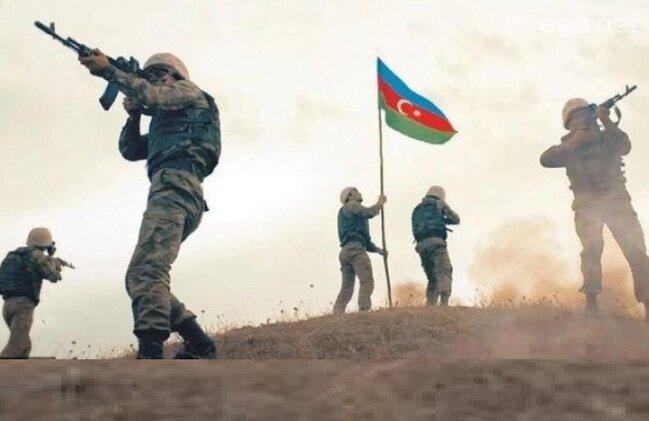
Within this complex geopolitical context, the result achieved by Azerbaijan in the 44-day war demonstrates that an entirely different approach is possible. The conclusion of the conflict within just 44 days with a concrete military-political outcome was not accidental, but the logical result of a systematic strategy developed over many years.
The main distinguishing feature of this process was the precise definition of objectives and the coordinated mobilization of all resources to achieve them. The war was conducted not only on the battlefield, but also in parallel across diplomatic, informational, and political domains.
This approach was clearly reflected in the statements of the head of state.
“Ours is the cause of justice, we are fighting on our own lands, we are fighting for the Motherland. We are fighting for a fair cause, and I am sure that in this conflict we will achieve what we want. Justice will be done and Azerbaijan will restore its territorial integrity. Our compatriots who have been living as IDPs for many years will also return to their native lands” – this statement served as one of the key theses forming the strategic and moral foundation of the war.
The local measures implemented in 2023 acted as the final stage of this strategy and demonstrated that the process had been planned in a consistent and phased manner.
Strategic preparation and political will: the invisible key factor
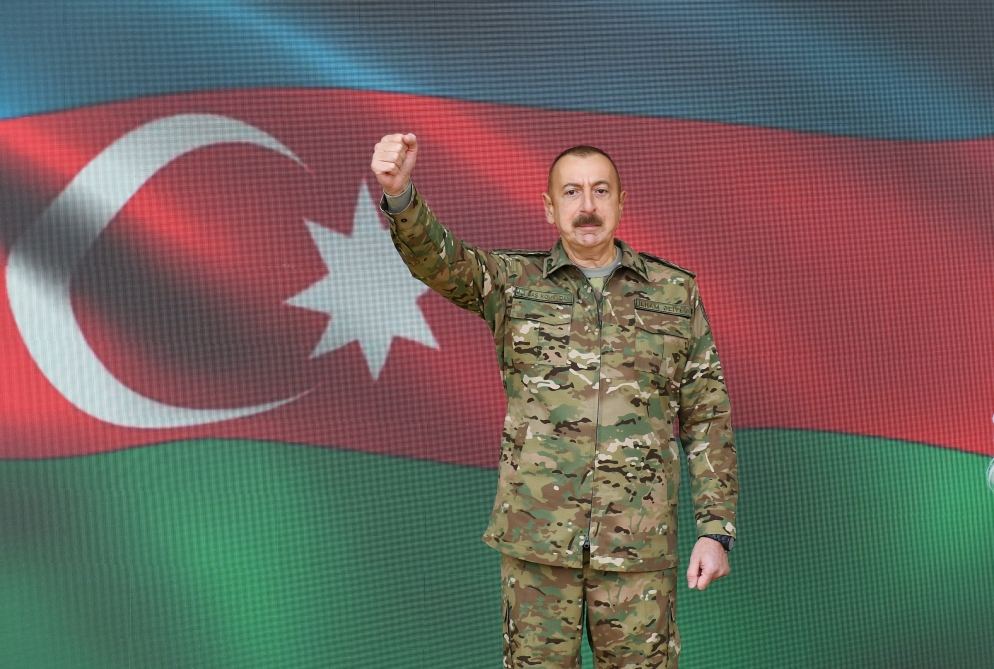
One of the main problems of prolonged conflicts is the fragmented nature of strategic preparation. In Azerbaijan’s case, however, the exact opposite was observed. The policy implemented in the period preceding the active phase of the conflict shows that the process was based not only on military operations, but on a broader state strategy.
Strengthening positions in the diplomatic arena, systematically presenting international legal arguments, and shaping the correct narrative in the information space were key components of this strategy.
This approach was also reflected in the principled stance of the head of state: “Azerbaijan will never make any concessions regarding its territorial integrity,” a statement that defined the consistent line of policy pursued over the years.
Such a consistent and unwavering position served as one of the main pillars of strategic preparation.
Operational management and decision-making: effective use of the time factor
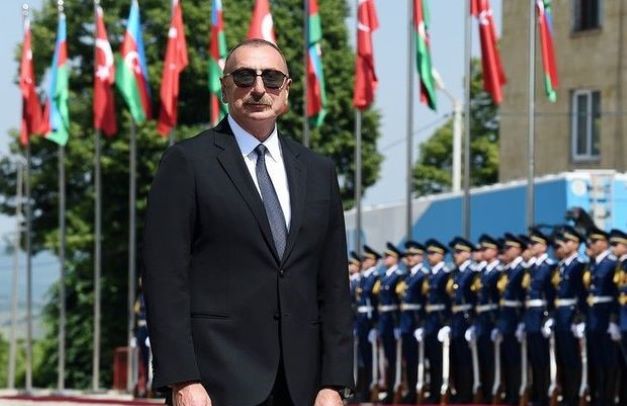
In modern warfare, the time factor plays a decisive role.
The prolongation of a conflict exhausts the resources of the parties and weakens their ability to achieve results. In Azerbaijan’s case, however, the process was directed toward achieving results in the shortest possible time.
An operational decision-making mechanism, the continuous maintenance of initiative, and the uninterrupted continuation of operations became key factors shaping the dynamics of the war.
This approach was reflected in the statements of the head of state: “What we are doing on the battlefield we do ourselves. Yes, with modern weapons, with modern equipment but it is Azerbaijani soldiers and officers who liberate our motherland” – this message served as a strategic signal directed both to the domestic audience and the international community.
Technological superiority and a new model of warfare
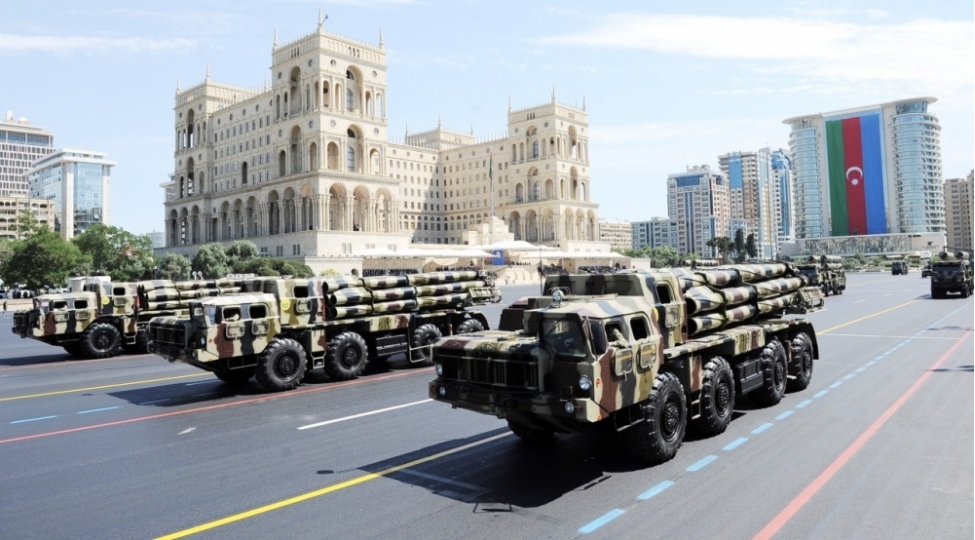
In the modern era, technology has fundamentally changed the nature of warfare. Azerbaijan, by correctly assessing these changes, applied new approaches in military operations. This not only created an advantage on the battlefield but also enabled operations to be carried out with fewer losses and greater efficiency.
This process was not limited to technical modernization alone. At the same time, military strategy was adapted to evolving realities.
This approach was complemented by the following idea: “Modern technologies and a strong army are our main advantage” – this thesis defined one of the key directions of military planning.

