
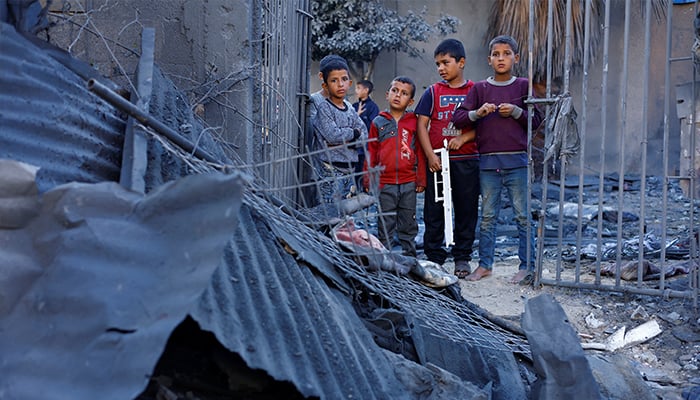
Explosive weapons killed or injured children at unprecedented levels last year as wars increasingly shifted into densely populated urban areas, Save the Children warned in a new report on Thursday. Citing UN data, the charity said nearly 12,000 children were killed or wounded in conflict zones worldwide in 2024 — the highest figure since records began in 2006 and a 42% increase from 2020.
Read More: IED Attacks: Pakistan Records Second-Highest Global Casualties
The report found that more than 70% of child casualties were caused by explosive weapons such as missiles, drones and grenades, a significant rise from the average of around 59% recorded between 2020 and 2024. As fighting intensifies in cities like Gaza, Khartoum and Kyiv, children are increasingly caught in bombings that hit hospitals, schools and residential neighbourhoods.
Save the Children experts said the nature of modern conflict is “destroying childhood”, with attacks striking places where children sleep, learn and play. Narmina Strishenets, senior conflict and humanitarian advocacy advisor, warned that homes and schools have become “death traps”, while medical specialists highlighted that children’s smaller bodies make blast injuries far more severe and recovery more difficult.
The conflicts with the highest child casualties last year were in Gaza and the occupied West Bank, Sudan, Myanmar, Ukraine and Syria. Gaza remained the deadliest conflict for children in recent years, with the report stating that 20,000 children have been killed since Israel launched its war on the territory following Hamas’s October 2023 attack.
Read More: Kashmir Explosion Kills Nine, Injures Dozens
Humanitarian organisations continue to call for stronger international protections for children in conflict, urging all parties to reduce the use of explosive weapons in populated areas and prioritise civilian safety.

