
Latin America is finally attracting a larger pool of capital from abroad.
The region’s financial system has always been fragmented. Divided by borders, currencies and regulatory silos, it has been hard for capital to flow freely across the region. A Costa Rican investor who wants exposure to a Brazilian asset faces incredible hurdles. Even simple cross-border payments often depend on the U.S. banking system as an intermediary.
However, a new wave of crypto-native financial platforms is quietly building a parallel financial infrastructure that enables Latin Americans to invest across countries as easily as Europeans do within the European Union. Thanks to crypto, the region’s financial markets are finally becoming unified.
Latin America is one of the most culturally and commercially integrated regions in the world. Goods and people flow across its borders with ease. Yet its financial markets have remained stubbornly split into numerous pieces.
For starters, each country maintains its own currency, banking system and payment rails. There is SPEI in Mexico, Pix in Brazil and Transfiya in Colombia, just to name a few. These systems work well within their borders but aren’t connected to one another. International wire transfers frequently route through offshore Caribbean bank branches before reaching destinations elsewhere in the region, which is costly and time-consuming.
The upshot is that, for quick cross-border transactions between Latin American countries, people and businesses rely heavily on U.S. intermediaries like Western Union or MoneyGram. It’s absurd that a Peruvian investor will face fewer difficulties moving money to the United States than to neighboring Argentina.
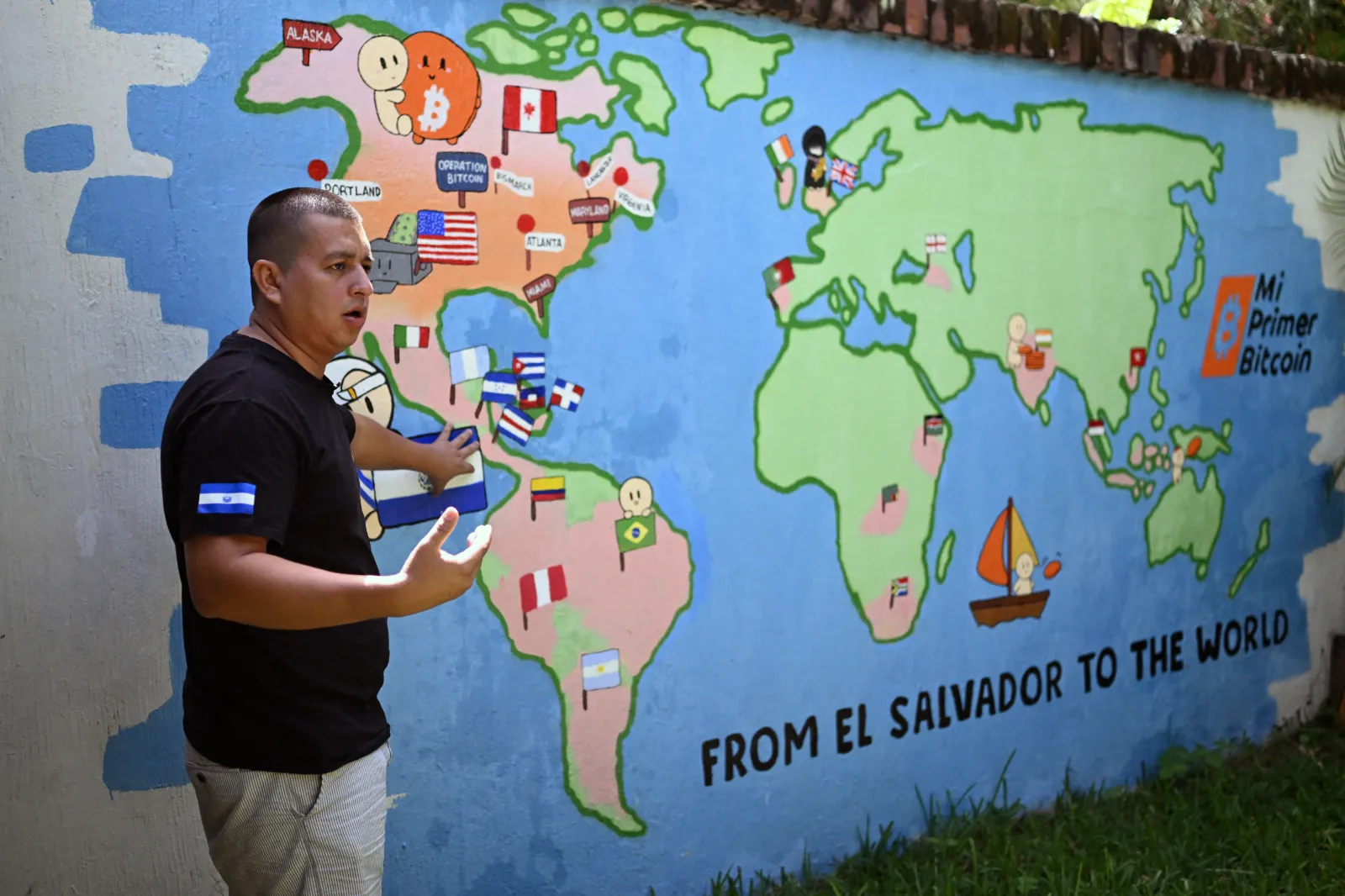
Put differently, the region suffers from clogged financial arteries. But blockchain technology is coming in to rejuvenate the system.
Crypto platforms are no longer just exchanges; they’re becoming full-service ecosystems. In multiple nations—Argentina, Brazil, Mexico—local companies are offering users wallets, stablecoin transfers, yield products and debit cards. Some of them are also integrating their country’s businesses and investment firms to these new rails with institutional grade services, thus turning into true one-stop shop financial solutions.
Stablecoins, too, are emerging as a new settlement layer across Latin America. Businesses in Argentina can invoice clients in Mexico or Brazil and receive their payments almost instantaneously while paying minimal fees. The rise of local stablecoins—backed by local currencies instead of the U.S. dollar—is enabling the region to sidestep U.S. intermediaries altogether.
These developments hint at something bigger: the birth of a shared crypto-financial identity for the region.
For this integration to truly take hold, regulation must evolve. Fortunately, Latin America’s governments are starting to converge toward compatible frameworks for digital assets.
El Salvador, which made Bitcoin legal tender in 2021, has developed one of the world’s most advanced crypto regulatory regimes. Its National Digital Assets Commission (CNAD) has already signed collaboration agreements with other countries, including Argentina and Paraguay.
Brazil is also emerging as a central player in this regulatory convergence. After approving its crypto law in 2022, the country moved forward to structure a comprehensive regime for virtual asset service providers. The country now benefits from one of the most robust regulatory environments in the region and is positioning itself as a reference point for crypto platforms operating across multiple Latin American countries.
Chile, too, has passed its own licensing regime for exchanges and wallet providers. Meanwhile, Peru and Colombia are both still developing their own frameworks.
These regimes don’t need to be regionwide like Europe’s Markets in Crypto-Assets (MiCA) regulation. The important thing is for them to be mutually intelligible and to make it easy for crypto infrastructure to operate across borders safely and compliantly.
For investors worldwide, today’s Latin America looks like 20 separate markets, each with its own rules, risks and currencies. But with interoperable crypto infrastructure, it can begin to operate as a more integrated market—a “LatAm Capital Zone”—in which liquidity moves smoothly across national borders.
Latin American companies could raise capital across the whole region instead of simply receiving funds from within their own nation. Venture capital firms, for their part, will jump at the opportunity to invest in platforms that aim to scale across the entire continent.
Risk premiums will also lower significantly, because investors will be able to diversify regionally with ease. Regional ETFs and on-chain indexes will make powerful investment vehicles for retail and institutional investors that are bullish on the continent’s overall economic development. And Latin Americans will be able to lend money or acquire debt from other nations through DeFi protocols and tokenized credit markets.
This kind of financial activity would boost the region’s economic activity tremendously. Businesses would be incentivized to think big in order to catch as much regional market share as possible. The competition would yield even better financial products for consumers.
Driven by treaties, central banks and political consensus, Europe’s financial unification was a slow, deliberate process. The euro and SEPA made cross-border transfers seamless, but it took decades to build.
This strategy hasn’t been possible for Latin America. For too long, the region’s bureaucracy, politics and outdated financial infrastructure has kept it from realizing its full economic potential. Crypto changes the equation. Instead of waiting for policymakers to harmonize the rules, technology is already allowing individuals and businesses to build their own shared financial future, one transaction at a time.
Sebastián Serrano is the founder and CEO of Ripio, an Argentine crypto exchange with more than 12 years of proven experience, operations in eight countries and a reach of more than 25 million users along with more than 1,500 companies and institutions.

