
Veteran investment manager Yaakov Weinstein says global markets are heading toward a severe economic reckoning by the end of the decade, warning that a deep crisis and prolonged recession — comparable in scale to the Great Depression — are likely around 2029, even as markets continue to post gains in the near term.
In an interview, Weinstein said the coming downturn will not be triggered by a single dramatic event, but rather by a convergence of long-running economic processes that are nearing exhaustion after years of growth, high valuations and rising prices.
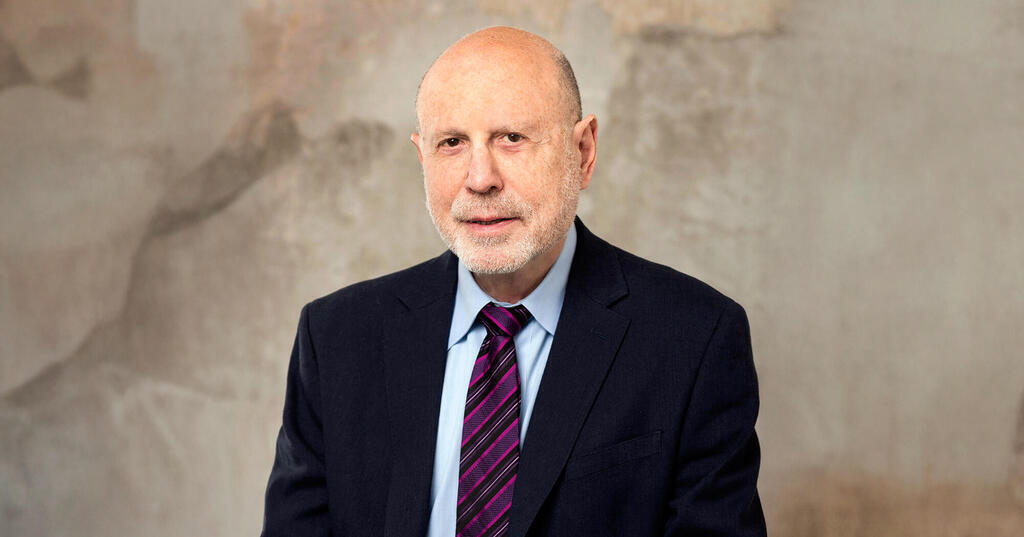
“There won’t be one trigger that everyone can point to,” Weinstein said. “The fuel that has driven the markets higher will simply run out. That’s how big crises actually happen.”
Weinstein, 75, is one of the most experienced figures in the local capital market. He previously served as chief investment officer at Migdal Capital Markets and founded Afikim Investment House. Today he lives in London, where he manages the IBI Total Return hedge fund for IBI Investment House. The fund seeks to generate positive returns in all market conditions, with low volatility and limited correlation to broader markets.
Despite his long-term pessimism, Weinstein pointed to the continued strength of the shekel as evidence of the unique structure of the local market. He said the currency has held up despite political turmoil and the events of October 2023 largely because the capital market is dominated by large domestic institutional investors.
“The shekel is a phenomenal story,” he said. “The real reason it holds up is that the market here is very closed. Foreign investors come in from time to time, but the big local institutions always step in to buy, even when markets fall and foreigners are selling.”
Weinstein said strong profitability at banks and insurance companies, a robust defense industry and ongoing technology exits continue to generate foreign currency inflows. Future revenues from natural gas sales are also expected to support the currency. As a result, he said, even a strengthening dollar globally does not rule out further appreciation of the shekel.
Foreign investors, however, remain marginal players, he said. The Tel Aviv stock exchange is too small to meet the needs of large global institutions, both in scale and in the breadth of listed companies.
“When people talk about major foreign inflows, it’s usually just buying according to the market’s weight in global indices,” he said. “Compared with the biggest companies in the United States, this is simply a different world.”
Weinstein dismissed the idea that moving stock trading to a Monday-through-Friday schedule would meaningfully increase foreign participation. He said cultural habits tied to Fridays make such a change difficult to sustain and predicted the market could revert to its previous schedule within a year or two.
His comments came despite a recent Friday session that saw trading volumes of about 3 billion shekels, led by heavy activity in bank shares favored by foreign investors.
Weinstein was sharply critical of valuations in the property and construction sectors, describing them as broadly inflated.
“I’m astonished by the valuations of real estate and construction companies,” he said. “That’s a blanket statement.”
He said expectations of large-scale rebuilding after the war with Iran had been priced in, even as demand for office space weakens. Central areas, he said, are already showing signs of oversupply, echoing trends seen earlier in the United States.

Emotional buying by Jewish purchasers from abroad has helped keep prices elevated in Jerusalem and coastal cities such as Netanya, Weinstein said. Still, he believes demand for large apartments has largely been exhausted, while demand for smaller units remains steady due to the constant formation of young households.
Overall, he does not expect significant price increases in the housing market in the coming years.
Weinstein said upcoming elections are unlikely to materially affect markets, the shekel or property prices. From the perspective of foreign investors, he said, the country is widely viewed as closely aligned with Washington, limiting the market impact of local political changes.
He described President Donald Trump as the most supportive U.S. leader the country has known, while noting that Trump also maintains close ties with Qatar, Gulf states and Turkey and is primarily motivated by personal interests. Weinstein said he expects Trump to become “the first trillionaire president” by the end of his term.
Looking ahead to global markets, Weinstein said 2026 is likely to be another positive year, though with more moderate gains of around 10%, compared with roughly 20% annual increases in recent years. He said U.S. midterm elections in November will shape economic policy, with efforts aimed at supporting household finances.
He expects deeper interest rate cuts than fundamentals alone would justify, particularly if leadership changes at the Federal Reserve blur the distinction between the Treasury and the central bank. Policy, he said, will focus on lowering pressures tied to fuel, food and mortgage costs. He did not rule out the introduction of 50-year mortgages.
Beyond the short term, however, Weinstein sees mounting risks. He said high valuations, persistent price increases, demographic shifts and soaring health care costs are converging. As baby boomers retire, consumption will slow, weakening the engine that has supported growth since World War II.
While artificial intelligence may boost productivity and profits in the coming years, Weinstein said current valuations are already stretched, with price-to-earnings ratios on the S&P 500 hovering around 23 to 24. Sustaining further gains would require profit growth of more than 13%, a level he views as unsustainable.
He also warned that many massive investments in artificial intelligence will ultimately fail to deliver expected returns, becoming another contributor to the end-of-decade downturn.
Weinstein dismissed the idea that an influx of young retail investors could prevent a major market correction. He pointed to their behavior in cryptocurrency markets, where many exited after prices fell and later shifted back into equities.
“These are not strong hands,” he said. “When markets fall, they run.”
Large institutional investors will continue to dominate, he said. At the same time, AI-driven job losses could slow the growth of pension contributions, while higher wages for remaining skilled workers could add inflationary pressure.
Weinstein also said the war between Russia and Ukraine is likely to end soon with an agreement that effectively amounts to Ukraine’s capitulation, drawing a historical parallel to the Vietnam peace accords brokered by Henry Kissinger.
Weinstein said his own investment approach is designed to survive precisely the kind of environment he expects later this decade. His focus is on minimizing volatility and delivering consistent returns rather than chasing market highs.
His target is steady monthly gains of 1% to 1.5%. In 2022, when global markets fell between 10% and 20%, his fund ended the year flat. In 2025, it returned 13.6%, underperforming the broader market but with significantly lower risk.
“That’s the real hedge,” he said. “To generate solid returns over time with lower volatility than bonds. This market is ruthless — you’re only as good as your last return.”

