
Oakland’s City Council will vote next week on a controversial surveillance technology contract, just weeks after it failed to advance out of committee amid concerns over the company’s data-sharing practices.
The Oakland Police Department’s proposal to extend the contract with Flock Safety, which operates nearly 300 automatic license plate reader cameras across the city, did not pass a vote in the council’s Public Safety Committee last month. But this week, it was brought back before the Rules Committee, which moved it forward on Thursday.
“I’m deeply concerned that this process feels like it lacks transparency and democracy,” Councilmember Carroll Fife said. “This item failed in committee and should go back to committee and be deliberated in that space.”
According to Lance Wilson, policy and communications director at the Anti Police-Terror Project, the contract was only added to the Rules Committee meeting agenda on Wednesday afternoon, “with less than 24 hours’ notice to the public.”
He called the committee’s decision to revive a contract vote by the council “stunning and undemocratic,” saying more than 4,000 Oakland residents have urged the council to vote no on Flock expansion, and more than 40 organizations, including the ACLU of Northern California and multiple local unions, submitted a joint letter warning that approving the contract would hurt immigrants, communities of color and unhoused residents.
Fife and many residents had spoken out against granting a new two-year contract to the Atlanta-based company. The city’s volunteer Privacy Advisory Commission also refused to endorse OPD’s contract plan.
Privacy advocates have long had concerns about the amount of data stored, collected and shared by Flock, but its technology has come under increased scrutiny in recent months after reports revealed that its searchable license plate database has been used to aid federal investigations, including by the Department of Homeland Security and Immigration and Customs Enforcement.
State law prohibits local law enforcement from sharing automated license plate data with out-of-state and federal agencies, and Oakland’s sanctuary city policy bars police and city officials from aiding in immigration enforcement.
Over the summer, the San Francisco Standard reported that OPD’s data was accessed on behalf of federal agencies, and just last month, Richmond shut down its network of cameras after discovering that the data they captured was searchable by federal agencies, despite believing it was for internal use only.
In November, the nonprofit Secure Justice and its leader, Brian Hofer, sued Oakland over the reports of data sharing. The suit alleges that the department’s data was made accessible to at least six federal agencies and a number of non-California state and local agencies.
A month prior, Attorney General Rob Bonta sued the city of El Cajon in San Diego County over similar Flock data sharing.
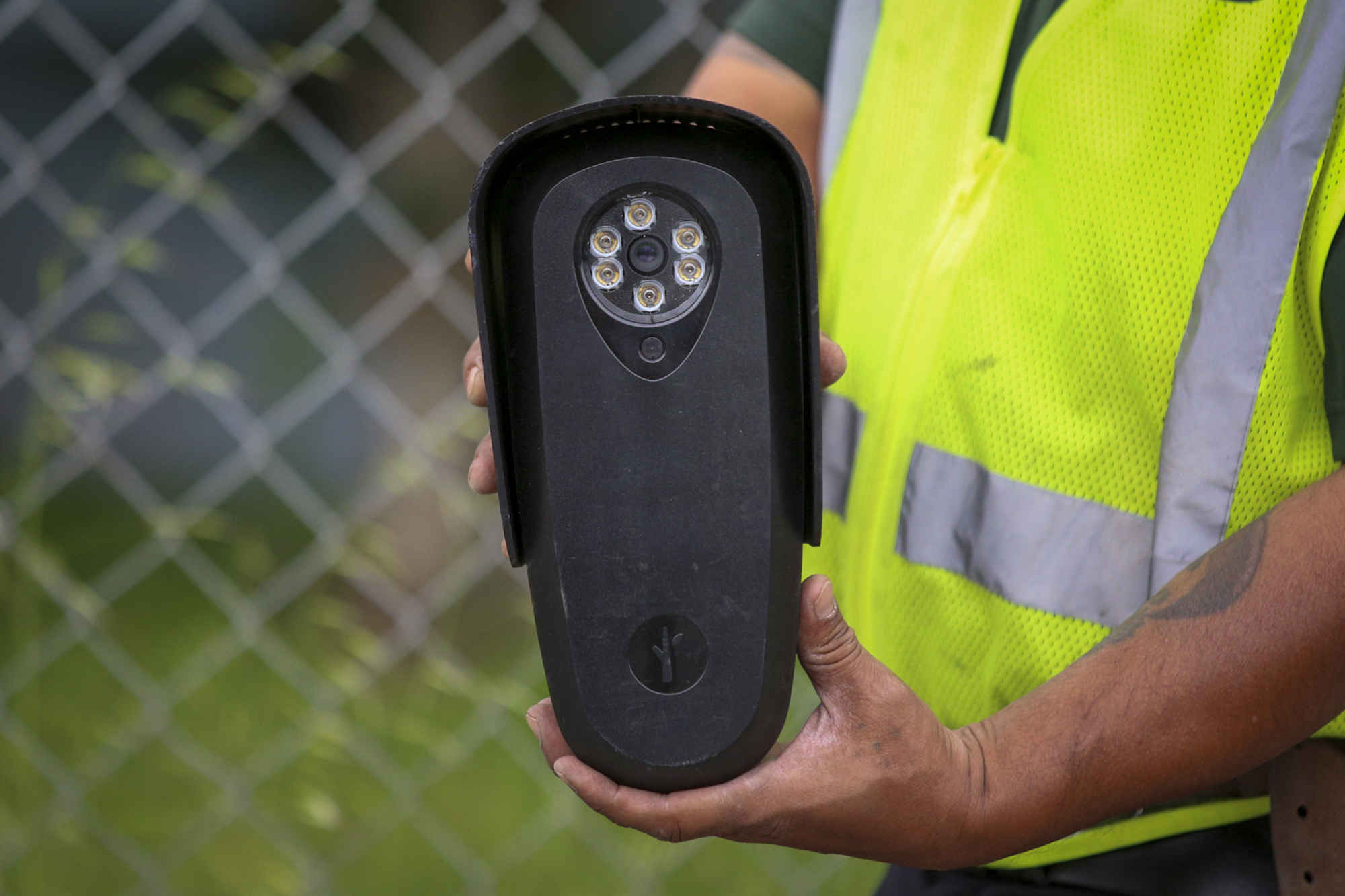
As part of Flock’s services, it offers contracted agencies multiple data sharing options: a “National Lookup,” which allows two-way access to data between all Flock Safety customers who have opted in; a “State Lookup,” which creates a similar arrangement with other Flock customers only in their home state; and a 1:1 sharing option, which requires customers to add agencies they would like to share data with individually.
Oakland has previously said that its license-plate reader data would not be made accessible outside OPD due to privacy concerns, but city documents show that the data was made accessible and shared with at least six federal and a number of non-California state and local agencies, according to Hofer’s lawsuit.
The city has been using a network of 290 Flock cameras along highways and high-traffic areas to aid in police investigations since March 2024. Around the same time, departments across the Bay Area entered similar contracts with Flock as part of a push to crack down on crime.
Last month, OPD proposed a two-year, $2.25 million contract for Flock to maintain the existing camera network and allow police to access private cameras in the company’s system when the current contract ends in February.
The four-member Public Safety Committee deadlocked, with Councilmembers Charlene Wang and Ken Houston voting in favor and Councilmembers Rowena Brown and Fife voting against it.
At the meeting, Fife said she feared the data “falling into the hands of bad actors that have a track record” of working with agencies involved in immigration enforcement. She suggested that the department consider other vendors who could provide similar technology to use instead.
When the proposal was brought back to the Rules Committee this week, Councilmembers Kevin Jenkins and Janani Ramachandran, along with Brown, voted in favor of agendizing the contract vote, while Fife lodged the sole vote against.
“I believe that we can use cameras for public safety tools, but this vendor has shown time and time again that they will just thwart the rule of law in cities and states all over the nation,” Fife said Thursday.
In public comment during Thursday’s meeting, Councilmember Houston voiced support for the plan, and representatives from Councilmember Zac Unger and Wang’s office also supported moving the vote forward.
It’s slated for a vote at the full council on Tuesday.

