
Pumpjacks work the wells operated by Chevron at Midway-Sunset field near Fellows, north of Taft, in Kern County, California, March 8, 2026. (AFP Photo)
Global markets kicked off the week with steep losses Monday as Asian stocks led the selloff and oil prices surged more than 30%, fueling worries about prolonged supply disruptions in the Middle East amid the Iran war.
Japan’s Nikkei 225 fell 5%, while Hong Kong’s Hang Seng dropped more than 1.7%. China’s Shanghai Composite declined by 0.5%. South Korea’s Kospi, which had been among the strongest performers this year due to a technology rally, slid 6%.
The pan-European Stoxx 600 fell around 2%, while futures for all three major U.S. indexes also declined, with S&P 500 futures down about 1.5%.
More to Read
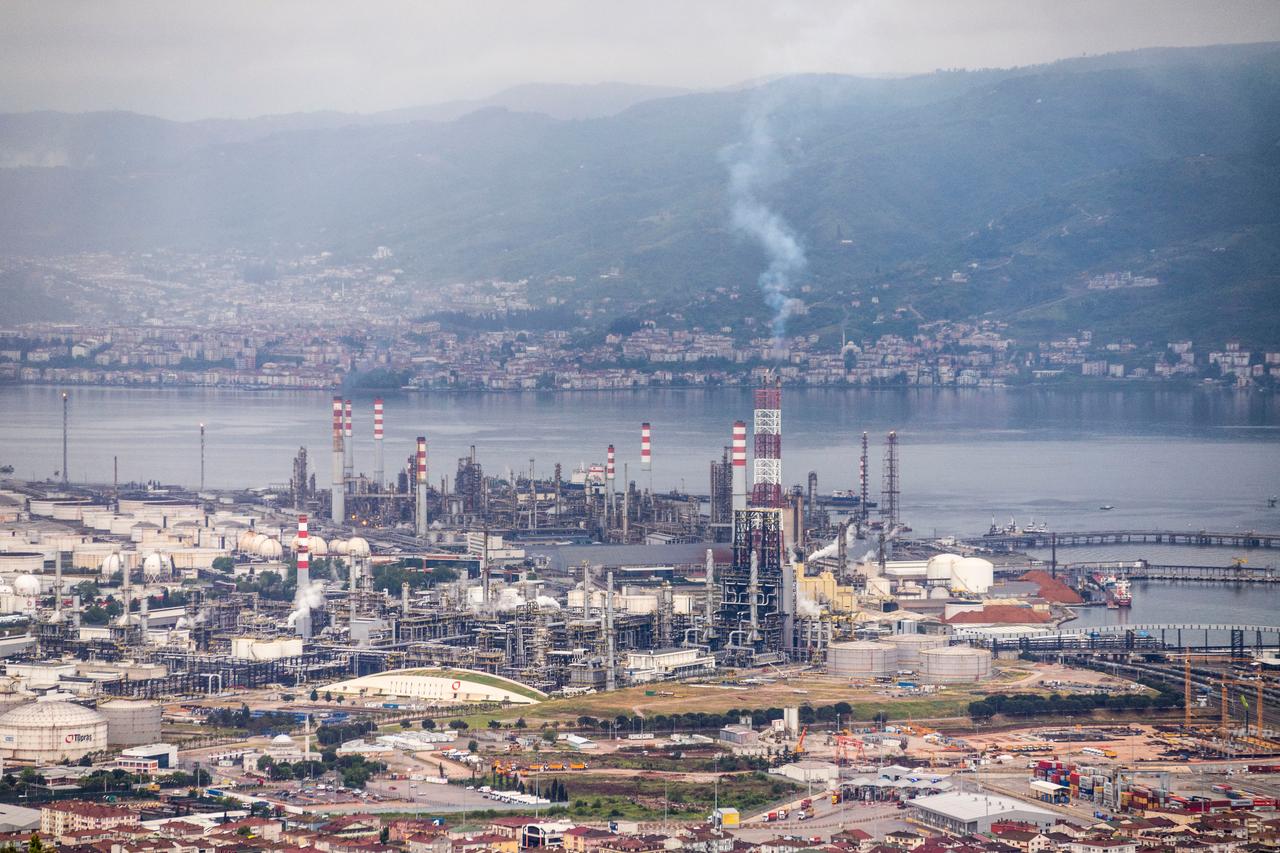
Crude oil prices jumped sharply as the war between the United States, Israel and Iran entered its second week with no sign of easing.
West Texas Intermediate, the main U.S. oil benchmark, surged as much as 30% to reach $119.47 per barrel, while Brent crude rose to a peak of $119.31 per barrel, retreating following hours to $105-$108, respectively.
Energy markets reacted to several developments affecting regional production and transport. Attacks were reported on oilfields in both southern and northern Iraq, forcing a U.S.-operated oilfield to halt production. At the same time, the United Arab Emirates and Kuwait began cutting output.
Shipping through the Strait of Hormuz, a route used for about one-fifth of global crude and gas shipments, has been halted since the war started on Feb. 28.
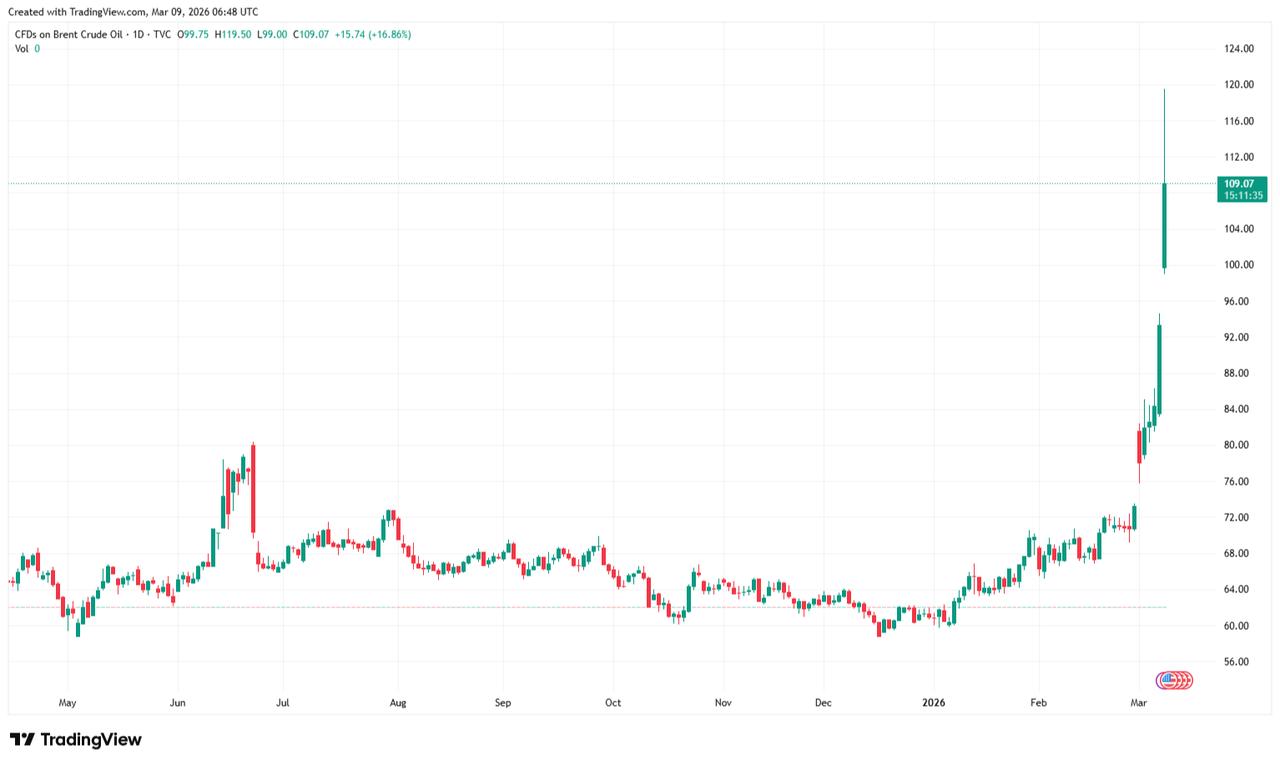

Candlestick chart shows price movements in Brent crude oil from April 2025 to March 2026. (Chart via TradingView)
Oil rally raises inflation fears, pressures precious metals
The surge in oil prices has increased concerns about a new wave of global inflation.
Higher energy costs could complicate efforts by central banks to lower interest rates, which many economies rely on to support growth. Markets were already uneasy about elevated technology sector valuations and the scale of investment linked to artificial intelligence before the latest geopolitical tensions intensified.
The outlook for the conflict also weighed on sentiment after U.S. President Donald Trump said that only Iran’s “unconditional surrender” would bring the war to an end.
Gold prices also moved lower despite geopolitical tensions. The metal dropped more than 1% to $5,019 per ounce as the U.S. dollar index rose 0.7% to 99.5.
Silver briefly fell below $80 per ounce before recovering to around $84. Platinum and palladium also declined, reaching intraday lows of $1,580 and $2,030, respectively.
Digital assets showed mixed movements during the volatility. Bitcoin recovered from an earlier drop to $65,000 and climbed back above $67,500. Ethereum traded above $2,000 with a daily gain of about 3% as of 06:30 GMT. The total cryptocurrency market capitalization increased by 1%.

